











Washington State Liquor & Cannabis Board (WSLCB) Compliance Software
Washington State operates one of the most unique alcohol regulatory environments in the country. The Washington State Liquor & Cannabis Board (WSLCB) oversees both alcohol and cannabis under one agency. Following Washington’s 2012 privatization of spirits sales, the state shifted from a control structure to a private retail model, but with continued WSLCB licensing authority over manufacturers, distributors, and retailers. Multi-location restaurant, bar, and retail operators in Washington manage WSLCB-issued endorsements (spirits/beer/wine restaurant, hotel, grocery, specialty wine, etc.), Mandatory Alcohol Server Training (MAST) per employee, and local jurisdictional approvals layered on top. This guide explains how multi-location operators handle WSLCB compliance and how Copliancy supports the workflow.
Washington’s alcohol regulatory framework operates under the Washington State Liquor & Cannabis Board (WSLCB) following 2012 voter-approved privatization of spirits sales. The state operates on an endorsement model rather than discrete license types — a base license is issued and operators add endorsements for specific activities (spirits/beer/wine restaurant, hotel, grocery, specialty wine, caterer). Mandatory Alcohol Server Training (MAST) is required statewide for any employee selling, serving, or supervising alcohol service, with Class 13 (Server Permit, ages 18-20, beer/wine only) and Class 12 (Mixologist Permit, ages 21+, full bartending including spirits) certification levels. Multi-location operators face annual WSLCB renewals on endorsement-specific cycles, MAST tracking for hundreds of employees with 5-year permit cycles, local jurisdictional approvals (Seattle, Tacoma, Spokane, Bellevue, Vancouver), and Washington-specific operational rules including the state’s strict prohibition on tied-house arrangements. Cannabis retail and licensing live under the same WSLCB umbrella, creating distinct workflow needs for operators in that segment. Copliancy supports multi-location operators with per-location endorsement tracking, per-employee MAST management, payment tracking with AP integration, and aggregate visibility for ownership review.
WSLCB and Washington Alcohol Licensing Structure
The Washington State Liquor & Cannabis Board operates differently from most state alcohol agencies:
- Combined alcohol and cannabis agency. WSLCB oversees both regulated industries under one administrative structure following I-502 cannabis legalization in 2012.
- Endorsement-based model. Rather than discrete license types, WSLCB issues a base license to which specific endorsements are added for the activities the operator conducts.
- Post-privatization private retail. Following 2012 spirits privatization, beer/wine/spirits retail moved to private operators (grocery, package stores). WSLCB retains licensing authority over manufacturers, distributors, and retailers.
- Mandatory MAST training. Mandatory Alcohol Server Training is required statewide. Two certification levels: Class 13 (Server Permit, ages 18-20, beer/wine only) and Class 12 (Mixologist Permit, ages 21+, full bartending and spirits).
- Strict tied-house enforcement. Washington enforces strict separation between manufacturer, distributor, and retailer tiers. Tied-house violations carry significant penalties.
- Active enforcement. WSLCB conducts proactive enforcement including underage compliance checks, hours violations, and tied-house investigations.
WSLCB Endorsement Types Multi-Location Operators Track
Full alcohol service for on-premise consumption at restaurants meeting food service requirements. Annual renewal.
Beer and wine service only (no spirits) at restaurants. Lower entry fee than full alcohol endorsement.
Alcohol service at hotel operations including room service, conference facilities, and on-site restaurants under hotel management.
Beer and wine retail at grocery stores. Spirits retail requires additional endorsement and store size qualification.
Post-privatization spirits retail at qualifying locations (typically grocery, drug, and specialty stores meeting size thresholds).
Dedicated wine retail with specialized inventory and operational rules.
Beer/wine service at venues where alcohol is the primary activity (without significant food service).
Off-premise alcohol service at catered events. Required for restaurant groups with catering or banquet operations.
Temporary licenses for events and limited-duration activities. Per-event issuance with specific date ranges.
MAST Training: Per-Employee, Two Levels
Mandatory Alcohol Server Training is Washington’s statewide alcohol service training requirement. Key features:
- Two certification classes. Class 13 (Server Permit) is for employees ages 18-20 serving beer and wine only — no spirits mixing or bartending behind a 21+ bar. Class 12 (Mixologist Permit) is for employees 21+ and authorizes full bartending including spirits service.
- 60-day grace period for new hires. New employees may serve alcohol for up to 60 days before completing MAST. Tracking start dates and deadlines matters.
- Five-year permit validity. MAST permits are valid for five years and must be renewed before expiration.
- Per-employee records. Operators must maintain MAST permit numbers per employee and produce them on demand during WSLCB inspection.
- Required as license condition. Compliance with MAST requirements is a condition of license issuance and continued operation.
Multi-location operators with several hundred alcohol-serving employees across Washington locations track MAST as a continuous workflow — certifications issued on hiring, five-year renewals approaching, terminations clearing from active rosters. Integration with HR systems is essential.
Local Requirements Layered On Top
Beyond WSLCB, multi-location operators in Washington track local requirements:
- City or county business license. Most Washington cities require local business licensing in addition to state UBI (Unified Business Identifier) registration.
- Certificate of occupancy. Required from city or county building department. Must reflect current use.
- King County / Public Health food permits. Public Health — Seattle & King County conducts food service inspection separate from WSLCB. Other counties operate similar programs.
- Sign permits. City sign permits required for exterior signage. Permits must match approved plans.
- Seattle additional rules. Seattle Office of Police Department Off-Premise Permits for security planning at certain late-night establishments. Sweetened Beverage Tax registration where applicable.
- Outdoor seating permits. Sidewalk café permits and outdoor service authorization at city level.
- Fire safety inspection. Annual fire safety inspections required by local fire marshal.
Common Washington Compliance Issues
Bartenders mixing spirits drinks need Class 12 (Mixologist), not Class 13. Operators with employees under 21 (Class 13) assigned to spirits-mixing roles face citation.
Washington’s tied-house rules are strict. Manufacturer-provided promotional items, discounts, or favors can trigger violations. Per-location documentation matters.
Adding endorsements (catering, special occasion) without tracking can result in renewals that drop endorsements operators rely on.
Five-year permits seem easy to manage but spread renewals unpredictably. Without per-employee tracking, lapses surface during inspections.
WSLCB enforcement officers conduct proactive underage compliance checks. Failures trigger penalties and risk of license action.
Seattle, Tacoma, Spokane, Bellevue, and Vancouver each have distinct local rules. Multi-location operators sometimes apply Seattle rules to suburban locations or vice versa.
How Copliancy Handles Washington Compliance
Each location has a complete record of the base license plus all active endorsements, renewal dates, fees, and conditions.
Each endorsement tracked as a discrete record so additions and changes are visible. Renewals preserve full endorsement set rather than risking dropped endorsements.
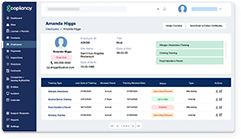
Each alcohol-serving employee tracked with MAST certification (Class 13 for ages 18-20 beer/wine only, or Class 12 for ages 21+ full service), permit number, and five-year expiration. Class 12 requirement enforced for spirits-mixing roles.
New hires tagged with hire date and 60-day MAST deadline. Alerts surface before deadlines so certifications happen on time.
City business licenses, certificates of occupancy, food permits, and city-specific permits tracked alongside WSLCB endorsements per location.
Promotional materials, discounts, and manufacturer-provided items documented per location to support tied-house compliance defenses.
WSLCB fees and local fees flow through AP approval. Payment status visible per permit. No surprise unpaid renewals.
License certificates, MAST permits, inspection reports, and correspondence attached to records. SharePoint and Dropbox integrations supported.
Portfolio reporting across Washington — WSLCB status, MAST compliance rates by class, upcoming renewals, and inspection patterns. Ready for ownership and board review.
Frequently Asked Questions
Does Copliancy file WSLCB applications?+
No. WSLCB applications, endorsement additions, and renewals are filed through the WSLCB online portal. Copliancy is the internal system of record — tracking applications in progress, capturing resulting licenses, scheduling renewals, and managing the full lifecycle.
How does Copliancy handle Class 12 vs. Class 13 MAST?+
Each employee’s role is tagged with required MAST class (Class 13 for ages 18-20 limited to beer/wine, Class 12 for ages 21+ authorized for spirits mixing). Permit numbers and expiration dates tracked separately. If an employee is assigned to a role requiring Class 12 but only holds Class 13, the system flags the mismatch.
Can Copliancy track WSLCB endorsements separately from the base license?+
Yes. The base license and each endorsement (spirits/beer/wine restaurant, caterer, special occasion, etc.) tracked as discrete records. Endorsement-specific fees and conditions documented. Renewals confirm the full endorsement set rather than risking dropped endorsements.
What about tied-house compliance?+
Washington’s tied-house rules are tracked through promotional materials documentation, manufacturer-provided items inventory, and policy controls per location. The compliance documentation supports defenses if tied-house questions arise.
Does Copliancy support cannabis retail compliance?+
Cannabis-specific compliance for WSLCB-regulated retail is supported through similar workflows — license tracking, employee certifications, inspection documentation. Cannabis retail operators face different compliance requirements than alcohol operators but Copliancy’s flexible framework supports both.
Is Copliancy used by Washington operators today?+
Yes. Multi-location operators with Washington operations including restaurant groups, hotel groups, and retail operators use Copliancy to manage their WSLCB compliance alongside their broader multi-state operations.