











Veterinary Practice Group License & Credential Management
Veterinary practice groups are one of the fastest-growing multi-location healthcare-adjacent segments. Private-equity-backed roll-ups have built portfolios of 50-1,000+ practices through acquisition and de novo openings. Like dental service organizations and urgent care chains, vet groups face a dual-layer compliance environment combining facility-level requirements (state board veterinary facility licensing, DEA registrations, X-ray equipment registration, controlled substance storage) with provider-level credentialing (per-state veterinarian licenses, DEA registrations, board certifications, continuing education). Multi-state vet groups face the additional challenge of per-state veterinary practice act variation and per-state controlled substance rules. This guide explains how veterinary practice groups handle compliance and how Copliancy supports the workflow.
Veterinary practice groups face a compliance environment that combines healthcare-style credentialing with multi-location operational scale. A typical veterinary practice carries: state veterinary facility license or registration (where required), business license, DEA registration per practice for controlled substance handling, state controlled substance registration, X-ray equipment registration with state radiation control program, OSHA bloodborne pathogen and hazard communication compliance, animal welfare/USDA registration for certain operations, controlled substance storage and recordkeeping per DEA requirements, anesthesia equipment certifications, and per-veterinarian credentialing including state DVM/VMD license per state, individual DEA registration, state prescriber registration, malpractice insurance, board certifications (specialty boards), continuing education tracking, and AVMA membership where applicable. Multi-state vet groups expanding through acquisition face significant integration burden — each acquired practice arrives with its own provider rosters, existing licenses in various states of currency, and inconsistent documentation. Per-state veterinary practice acts vary, with some states regulating non-veterinarian practice ownership (corporate practice of veterinary medicine doctrine in some states). Copliancy supports veterinary practice groups with per-practice license tracking, per-veterinarian credentialing, multi-state credential management, controlled substance documentation, and aggregate reporting for executive review.
Why Vet Group Compliance Is Different
Veterinary practice groups share characteristics with both dental service organizations and human healthcare while operating under distinct regulatory frameworks:
- Dual-layer compliance. Facility-level compliance (the practice as a business) layers with veterinarian-level compliance (each DVM’s individual credentials). Both layers must stay current independently.
- State veterinary practice acts. Each state regulates veterinary medicine through its own veterinary practice act. Some states have specific rules on corporate practice ownership and non-DVM oversight of practices.
- Multi-state expansion. Vet groups growing through acquisition cross state lines. License portability for veterinarians varies; some states require new state board examinations rather than reciprocity.
- Controlled substance handling. Veterinary practices use controlled substances for anesthesia, pain management, and behavioral medicine. DEA registration per practice and per prescriber matters.
- X-ray imaging. Most practices operate X-ray equipment for diagnostic imaging. State radiation control program registration and shielding inspections apply.
- Acquisition integration burden. Acquired practices arrive with incomplete credential records and inconsistent documentation. Integration to consistent compliance baseline takes 6-12 months without dedicated workflows.
Facility-Level Licenses and Registrations
Where required by state, facility licensing through the state veterinary medical board. Annual renewal. Inspection requirements in some states.
City or county business license per practice. State sales tax registration where applicable (some states tax veterinary products or services).
DEA registration for the practice location. Required for controlled substance handling including anesthesia drugs. Three-year renewal cycle.
State-level controlled substance registration in addition to federal DEA. Required in most states.
State radiation control program registration per X-ray unit. Initial shielding inspection plus periodic re-inspection. Equipment additions trigger permit work.
USDA registration for practices conducting certain research, breeding, or commercial activities. Most companion animal practices not required, but some sub-segments are.
Bloodborne pathogen, hazard communication, ionizing radiation, formaldehyde, hazardous drug exposure documentation per practice.
Biohazard waste generator registrations and disposal contracts. Sharps disposal documentation required.
Practices dispensing significant in-house pharmaceuticals may need state pharmacy permits in some states. Vary by state.
Veterinarian-Level Credentialing
Beyond facility licensing, every DVM in the practice group carries individual credentials. Per-veterinarian tracking includes:
- State DVM/VMD license. Per state where the veterinarian practices. Renewal cycles vary by state (typically 1-2 years). Continuing education requirements per renewal.
- Individual DEA registration. Per-prescriber DEA registration in addition to per-practice DEA. Three-year cycle.
- State controlled substance prescriber registration. Per-prescriber state registration in addition to federal DEA.
- Malpractice insurance. Per-veterinarian professional liability insurance. Coverage amounts and expiration tracked.
- Board certifications (where applicable). Specialty board certifications (ACVS, ACVIM, ACVECC, ACVO, ABVP, others) with renewal cycles per certifying body.
- USDA accreditation. National Veterinary Accreditation Program (NVAP) status for veterinarians performing federal regulatory work (interstate health certificates, regulatory exams).
- Continuing education. CE hours per state requirements. Specialty-specific CE for board MOC.
- AVMA membership. Most veterinarians maintain AVMA membership for professional standards and continuing education.
Controlled Substance Compliance
Veterinary practice controlled substance compliance is a significant focus area for DEA and state regulators. Multi-state vet groups face heightened scrutiny:
Practice-level and individual veterinarian DEA registrations with three-year cycles. State controlled substance registrations tracked alongside federal.
DEA-compliant secure storage (safe or substantially-constructed cabinet). Inventory recordkeeping. Theft and loss reporting procedures.
Required biennial DEA inventory documentation. Per-practice records maintained. Audit-ready documentation matters.
Schedule II controlled substances require specific recordkeeping with two-year retention. Sales and dispensing records auditable.
Some states require prescription drug monitoring program registration for veterinarians prescribing controlled substances. State-specific.
Controlled substance disposal must use DEA-authorized methods with documented destruction. Records retained.
How Copliancy Handles Vet Group Compliance
Each practice has a complete record of facility license, DEA, X-ray registration, OSHA documentation, medical waste permits, and pharmacy permits where required.
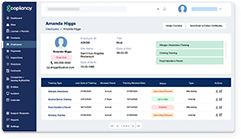
Every DVM with complete credential record — state licenses (per state), DEA, malpractice, board certifications, USDA accreditation, CE hours.
Veterinarians with licenses in multiple states tracked across all states. Renewal cycles per state. CE requirements per state. Inactive states preserved.
Per-practice and per-prescriber DEA registrations. Biennial inventory documentation. Storage and disposal records. PDMP registration where applicable. All audit-ready.
Each X-ray unit tracked with state registration number, shielding inspection cycle, and operator training. Equipment changes trigger permit updates.
When acquiring practices, integration workflows inventory existing licenses and vet credentials, identify gaps, and route remediation. Acquired practices reach standardized baseline quickly.
NVAP-accredited veterinarians tracked with accreditation status. Required for federal regulatory work including interstate health certificates.
License certificates, CE certificates, malpractice declarations, DEA registrations, controlled substance inventories, board certification documentation. SharePoint and Dropbox integrations supported.
Portfolio reporting on facility compliance, veterinarian credentialing rates, DEA compliance, X-ray equipment status, and CE compliance. Ready for executive, board, and lender review.
Frequently Asked Questions
How does Copliancy handle multi-state license tracking for veterinarians?+
Each veterinarian is configured with their active states. License records per state with renewal dates, CE requirements, and state-specific conditions. Vets expanding into new states tracked from application through active license. Inactive states preserved for historical record.
Can Copliancy handle vet group acquisition integration?+
Yes. Site due diligence workflows support vet group acquisitions — checklists for facility license inventory, veterinarian credential audit, controlled substance documentation review, and integration tracking. New acquisitions move from due diligence to operational compliance through standardized workflows.
Does Copliancy handle controlled substance documentation requirements?+
Yes. Per-practice and per-prescriber DEA registrations tracked with three-year cycles. State controlled substance registrations tracked alongside federal. Biennial inventory documentation, storage records, and disposal records maintained per practice. Documentation audit-ready for DEA inspections.
What about X-ray equipment in vet practices?+
X-ray equipment registered per practice with state radiation control program. Initial shielding inspections and periodic re-inspections tracked. Operator training (state-specific where required) tracked per employee. Equipment additions and replacements trigger permit work.
Can Copliancy track USDA NVAP accreditation?+
Yes. National Veterinary Accreditation Program status tracked per veterinarian. Required for federal regulatory work including interstate health certificates and certain export documentation. Renewal cycles and accreditation level documented.
Is Copliancy used by veterinary practice groups today?+
Multi-location veterinary groups face compliance challenges similar to DSOs and urgent care chains. Copliancy’s flexible architecture supports vet group operations including per-practice licensing, per-veterinarian credentialing, controlled substance documentation, and aggregate reporting.