











Tennessee Alcoholic Beverage Commission (TABC) License Tracking for Restaurant Groups
Tennessee’s alcohol regulatory structure splits jurisdiction between the state Tennessee Alcoholic Beverage Commission (TABC, not to be confused with Texas’s TABC) and local beer boards. TABC has jurisdiction over alcoholic beverages with 8% or greater alcohol by weight (10.1% by volume) — spirits, wine, and high-gravity beer. The TABC does not issue beer permits except for high-gravity beer; standard beer permits are issued by local beer boards in each city or county. Multi-location restaurant and bar operators in Tennessee navigate Liquor-by-the-Drink (LBD) licenses, retail wine licenses, server permits (now valid for two years as of January 1, 2025), Responsible Vendor Program participation, and per-jurisdiction local beer board approvals. This guide explains how multi-location operators handle Tennessee compliance and how Copliancy supports the workflow.
Tennessee’s alcohol regulatory structure is built on a jurisdiction split between the state Tennessee Alcoholic Beverage Commission (TABC) and local beer boards. TABC handles licensing for alcoholic beverages with 8% or greater alcohol by weight (10.1% by volume) — this captures spirits, wine, and high-gravity beer. Standard beer permits (below the 8% threshold) are issued by city or county beer boards rather than the state. Liquor-by-the-Drink (LBD), or On-Premise Consumption licenses, are issued to restaurants, hotels, private clubs, and other eligible establishments. Wine-only licenses are available for eligible restaurants. Multi-location operators navigate the dual structure — TABC for spirits and wine, local beer boards for beer — plus server permit requirements (mandated server training, with permits valid for two years as of January 1, 2025), Responsible Vendor Program participation, and city-specific operational rules. Tennessee’s three-commissioner TABC has commissioners from East, Middle, and West Tennessee (each Grand Division). The commission is governed by the Regulatory Licensing and Permitting System (RLPS) for online applications and renewals. Copliancy supports Tennessee operators with per-location LBD tracking, per-employee server permit management, local beer board coordination, payment tracking with AP integration, and aggregate reporting.
Tennessee TABC and Local Beer Board Structure
Tennessee operates a distinctive split regulatory structure:
- TABC jurisdiction threshold. TABC has jurisdiction over alcoholic beverages with 8% or greater alcohol by weight or 10.1% or greater by volume. Below that threshold, local beer boards have jurisdiction. High-gravity beer (above the threshold) requires TABC permits.
- Liquor-by-the-Drink (LBD). The on-premise consumption license issued by TABC. Authorizes restaurants, hotels, and private clubs to serve spirits, wine, and high-gravity beer.
- Wine-only options. Eligible restaurants can hold wine-only licenses through TABC rather than full LBD.
- Retail food store wine. Grocery stores selling wine require TABC retail food store wine licenses with Responsible Wine Vendor Program certification.
- Three-Commissioner structure. TABC has three commissioners representing East, Middle, and West Tennessee (the state’s Grand Divisions).
- RLPS portal. Applications and renewals process through the Regulatory Licensing and Permitting System (RLPS), an Accela-based portal.
- Local beer boards for beer. Standard beer (below the 8% ABW threshold) is regulated through city or county beer boards. Each board sets its own application process, hours, distance restrictions, and fees.
Tennessee License Types Multi-Location Operators Track
On-premise consumption license for restaurants, hotels, and private clubs. Authorizes service of spirits, wine, and high-gravity beer. The primary multi-location restaurant license.
For eligible restaurants serving wine only (no spirits). Lower entry cost than full LBD. Useful for wine-focused dining concepts.
Off-premise spirits and wine retail. Separate from restaurant licensing. Local jurisdictional rules apply.
Grocery stores selling wine. Requires Responsible Wine Vendor Program certification per TABC rules.
Beer above 8% ABW (10.1% ABV) falls under TABC jurisdiction rather than local beer boards. Separate permitting from standard beer.
Standard beer service requires permits from the local city or county beer board. Per-jurisdiction processes, fees, and renewals.
Distillery, winery, brewery licenses through TABC. Tennessee’s growing craft spirits industry creates substantial activity in this category.
Temporary licenses for events including wedding venues, festivals, and catered events. Per-event permitting available.
Required for restaurants with off-premise catering operations involving alcohol service.
Tennessee Server Permits and Server Training
Tennessee’s server permit requirement is per-employee. Key features as of 2026:
- Required for LBD service. Server Permits (On-Premise Permits) required for employees serving liquor, wine, and high-gravity beer at establishments holding LBD licenses.
- Two-year validity (Jan 1, 2025 forward). Server permits are valid for two years from the date of issue (changed from previous shorter cycles).
- State-mandated training. TABC-approved server training class is required. 3.5-hour class with chapter reviews and a final exam (65 questions, 76% passing score).
- Application fee plus class cost. $20 state application fee plus training class fee. Documentation maintained per employee.
- Electronic permit issuance. Permits are not mailed. Employees print their permits from the RLPS portal after passing the exam and completing the application.
- Responsible Vendor Program. TABC’s Responsible Vendor Program (separate from server permits) provides mitigation in disciplinary cases for participating establishments.
Local Beer Boards and the City Patchwork
For standard beer service, Tennessee operates a patchwork of local beer boards rather than a unified state system:
- City or county beer boards. Each city or county that allows beer sales operates its own beer board. Membership and authority vary.
- Application process variation. Each board sets its own application process, documentation requirements, and timelines. Multi-location operators across multiple cities handle multiple processes.
- Distance restrictions vary. Distance from schools, churches, and other restricted properties varies by jurisdiction. Some are stricter than state minimums.
- Sunday sales variation. Sunday beer sales authority varies by jurisdiction. Local option determines availability.
- Renewal cycles vary. Local beer board renewals may not align with state TABC renewals. Operators track both independently.
- Memphis, Nashville, Knoxville, Chattanooga. Each major Tennessee city has its own beer board with distinct rules and processes.
Common Tennessee Compliance Issues
Operators complete TABC LBD renewal but miss local beer board renewal (or vice versa). Both must be current for full operation.
Two-year cycles across hundreds of employees create constant churn. Without per-employee tracking, lapsed permits surface during inspection.
Beer above 8% ABW falls under TABC, not local beer boards. Operators offering craft beer with high-gravity options sometimes miss the TABC permit requirement.
Operators with locations in Memphis, Nashville, Knoxville, Chattanooga, and surrounding suburbs handle multiple beer board relationships with distinct processes.
RVP participation provides mitigation in disciplinary cases. Lapses surface only when establishments need the mitigation, by which point the benefit is unavailable.
Grocery stores selling wine need TABC retail food store wine licenses with RWVP certification. Operators sometimes miss the certification requirement at renewal.
How Copliancy Handles Tennessee Compliance
Each location has complete records of LBD license, any wine-only or specialty licenses, and high-gravity beer permits. RLPS-issued documentation attached.
Each location’s local beer board documented. Beer board permits tracked alongside TABC licenses. Multi-city operators manage multiple beer board relationships consistently.
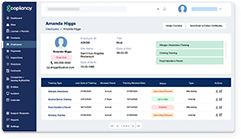
Every alcohol-serving employee tracked with server permit number, issue date, and two-year expiration. Integration with HR systems keeps employee data current.
Beer products categorized by ABW. Products above the 8% threshold flagged as requiring TABC permits. Operators offering craft beer programs avoid mistaking jurisdictional categorization.
RVP participation tracked per location with certification dates and renewal cycles. Mitigation availability documented for disciplinary case readiness.
TABC and local beer board renewal cycles tracked separately but visible together per location. Alerts surface both well in advance.
TABC fees, local beer board fees, server permit application fees, and training costs all flow through AP approval. Payment status visible per permit.
License certificates, server permits, local beer board approvals, RVP certifications, and correspondence attached to records. SharePoint and Dropbox integrations supported.
Portfolio reporting across Tennessee — TABC and local beer board status, server permit compliance rates, RVP participation, upcoming renewals. Ready for ownership and counsel review.
Frequently Asked Questions
Does Copliancy file TABC applications or RLPS submissions?+
No. TABC applications and renewals are filed through the RLPS portal by the operator or licensing counsel. Copliancy is the internal system of record — tracking applications in progress, capturing resulting licenses, scheduling renewals, and managing the lifecycle.
How does Copliancy handle TN’s split jurisdiction between TABC and local beer boards?+
Each location has both TABC permits (LBD, wine, high-gravity beer) and local beer board permits tracked together. Per-jurisdiction beer board documentation maintained alongside state TABC documentation. Renewal alerts cover both.
Can Copliancy track server permits for hundreds of employees?+
Yes. Server permits tracked per employee with two-year cycles starting from the January 1, 2025 effective date. Integration with HR systems keeps employee rosters current. New hires tagged with permit deadlines.
What about the Responsible Vendor Program?+
RVP participation tracked per location with certification dates. The program provides mitigation in disciplinary cases, so maintaining current certification matters for risk management. Renewal cycles tracked through standard workflows.
Does Copliancy understand the 8% ABW threshold?+
Yes. Beer products can be tagged by ABW to determine whether TABC or local beer board jurisdiction applies. Products above 8% ABW flagged as requiring TABC permits. Multi-location craft beer programs avoid mistaking categorization.
Is Copliancy used by Tennessee operators today?+
Multi-location operators with Tennessee operations including restaurant groups and hospitality operators use Copliancy to manage their Tennessee compliance alongside broader multi-state operations.