











New York Liquor Authority (SLA) License Tracking for Bars & Restaurants
The New York State Liquor Authority (SLA) operates one of the most complex and politically charged liquor licensing environments in the United States. Multi-location bar and restaurant groups in New York navigate three-year license cycles, community board hearings, the 200-foot rule, the 500-foot rule, method-of-operation restrictions, and unique New York City requirements layered on top of state oversight. A single Manhattan or Brooklyn location may go through 6-9 months of community engagement before the SLA issues a license. Multi-location operators expanding in New York face this complexity at every new opening. This guide explains how multi-location operators handle SLA compliance and how Copliancy supports the workflow.
The New York State Liquor Authority (SLA) regulates alcohol licensing for New York’s 60,000+ licensed establishments. Multi-location operators in New York face complexity unique to the state: three-year license cycles, the 200-foot rule (no on-premise liquor licenses within 200 feet of schools or houses of worship), the 500-foot rule (community input required for new on-premise licenses within 500 feet of three or more existing licenses), community board hearings before SLA filing, and method-of-operation stipulations that lock in specific operating hours, food service requirements, and entertainment limits. New York City adds another layer with Department of Consumer and Worker Protection, FDNY Place of Assembly Certificates, Department of Health food service permits, and Department of Buildings sign-offs. Single locations carry 8-12 active licenses and certificates. Multi-location operators with 10-30+ NYC and New York State locations face hundreds of overlapping renewals and inspections. Copliancy is used by New York-based and New York-operating multi-location groups including Maman NYC, STK Steakhouse, Hyde, Planet Hollywood, and others to handle exactly this workflow.
SLA and New York Liquor Licensing Structure
The New York State Liquor Authority is the state agency responsible for licensing and regulating the manufacture and sale of alcoholic beverages in New York. The SLA operates differently from most state alcohol agencies:
- Three-year license terms. Most on-premise licenses are valid for three years, not annually. This sounds simpler but creates a different problem — tracking dozens of licenses with non-aligned three-year cycles is harder than annual renewals.
- Community input requirements. Many new license applications require notification to the local community board before SLA filing. In New York City, community board hearings are de facto required for most applications.
- Method of Operation stipulations. When community boards object or when SLA imposes conditions, licenses come with stipulations: closing hours, food service requirements, no DJs, no live music, capacity limits. Stipulations stay with the license and follow into renewals.
- The 200-foot rule. No new on-premise liquor licenses may be issued for premises within 200 feet of a school or house of worship. Existing licenses are grandfathered but transfers face scrutiny.
- The 500-foot rule. In municipalities of 20,000+ population, new on-premise liquor licenses within 500 feet of three or more existing on-premise licenses require a public interest hearing. This affects nearly every Manhattan and Brooklyn application.
- Active SLA enforcement. The SLA conducts proactive enforcement including underage compliance checks, hours violations, and stipulation violations. Penalties are significant.
SLA License Types Multi-Location Operators Track
Full liquor service for on-premise consumption. Restaurants, bars, hotels, and clubs. Three-year cycle. Method of Operation stipulations often attached.
Wine service for on-premise consumption at restaurants meeting food service requirements. Three-year cycle.
Wine and beer for taverns and bars. Three-year cycle.
Beer-only service at restaurants. Lower fee than wine or full liquor licenses. Three-year cycle.
Full liquor for hotel operations including room service. Three-year cycle. Different fee structure than restaurant OP.
Off-premise catered events with alcohol service. Required for restaurant groups with catering divisions or banquet operations.
Off-premise wine retail. Wine-only stores. Annual renewal. Significant local market value due to limited availability.
Off-premise full liquor retail. Annual renewal. Same-zone restrictions apply to new applications.
Issued during transfer or renewal pendency to maintain continuous operation. Critical to track because expiration triggers immediate cease-of-service.
The Community Board Process in NYC
In New York City, community boards play a defining role in new license applications. Operators must navigate the community engagement process before, during, and after SLA filing:
Pre-Application Community Outreach
Before formal application, operators typically meet with the community board liquor committee, neighborhood block associations, and local council member offices. Concerns about hours, entertainment, noise, and parking get addressed in advance.
30-Day Notification to Community Board
New York State requires 30-day advance notification to the community board before SLA filing. The notification triggers the community board’s review process and scheduling of any required hearing.
Community Board Hearing
The liquor committee (and sometimes the full community board) hears the application. Operators present operating plans, food service plans, security plans, and respond to community concerns. The board votes a recommendation to the SLA — favorable, unfavorable, or favorable with stipulations.
Method of Operation Stipulations
If the board recommends approval with stipulations, the operator typically agrees to formal Method of Operation stipulations — specific closing hours, food service requirements, no DJs, no live music after a certain hour, maximum capacity, security plan elements. These stipulations are recorded with the SLA license and enforced at inspection.
SLA Application Filing
The application is filed with the SLA along with the community board recommendation and any stipulations. The SLA conducts its own review including the 200-foot and 500-foot rule analysis, background investigation, and premises inspection.
SLA Approval or 500-Foot Hearing
For applications subject to the 500-foot rule (typical in Manhattan and Brooklyn), the SLA holds a public interest hearing where opponents can submit evidence. The hearing process can add months to the timeline.
License Issued With Stipulations Attached
The license is issued (or denied). Approved licenses carry forward all Method of Operation stipulations. Stipulations follow the license through renewal cycles and govern day-to-day operation.
The full process from initial community outreach to active license can take 4-12 months for a typical NYC opening. Multi-location operators expanding into New York must plan for this timeline.
Special Rules and NYC Requirements
- 200-Foot Rule. No new on-premise liquor licenses within 200 feet of schools or houses of worship. Measured building wall to building wall. Existing licenses are grandfathered but transfers face additional review.
- 500-Foot Rule. Public interest hearing required for new on-premise liquor licenses within 500 feet of three or more existing on-premise licenses. Applies in larger municipalities and effectively all of Manhattan and most of Brooklyn.
- FDNY Place of Assembly Certificate. NYC venues with capacity of 75+ require an FDNY Place of Assembly Certificate. Required for SLA license issuance. Annual renewal.
- DCWP General Vendor License. Department of Consumer and Worker Protection requires various licenses for retail and service operations beyond the food/alcohol layer.
- NYC Department of Health Food Permit. NYC operates its own health department food service permitting separate from state-level health regulation. Annual renewal. A-grade letter posting required.
- DOB Sign-Offs. Department of Buildings sign-offs on certificates of occupancy, place of assembly capacities, and any construction modifications.
- Sidewalk Café Permits. NYC operates a complex sidewalk café licensing program. Enclosed and unenclosed sidewalk cafés have different permit structures.
Common New York Compliance Issues
Operators forget about stipulations attached during community board process — staying open past stipulated closing time, adding DJs when stipulation prohibits, exceeding capacity.
Annual FDNY Place of Assembly renewals get missed during management turnover. Lapsed certificates affect SLA renewals and trigger NYC inspections.
NYC’s public letter-grade system creates business pressure to maintain A grades. Re-inspections, grade pending periods, and remediation tracking become critical.
Three-year cycles spread renewals unpredictably across calendar. Without systematic tracking, operators discover expirations months after the fact.
Changes to operations — expanding hours, adding entertainment, changing concept — may require returning to community board for stipulation modifications.
SLA conducts proactive underage compliance checks. Failures trigger penalties and risk of suspension. Per-employee ID training tracking matters.
How Copliancy Handles New York SLA Compliance
Copliancy is used by New York-based and New York-operating multi-location operators including Maman NYC, STK Steakhouse, Hyde, Planet Hollywood, and others. The platform handles New York-specific complexity:
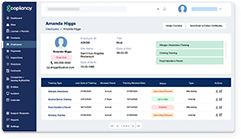
Each location has a complete record of all SLA licenses, three-year renewal dates, fee history, and current Method of Operation stipulations.
Three-year cycles are tracked with proactive alerts at 6 months, 3 months, and 30 days. Multiple stakeholders notified.
Stipulations attached to each license are documented and visible to operations — closing hours, food service requirements, entertainment limits. Day-to-day operation aligns to stipulations.
Community board hearings, votes, and stipulation negotiations documented per location. Historical record available for future renewals or modifications.
FDNY Place of Assembly Certificates, DOH food service permits with letter grades, DCWP licenses, DOB sign-offs — all tracked alongside SLA licenses per location.
SLA applications tracked through community board engagement, SLA filing, 500-foot hearings, and final approval. Auto-promote to active status on issuance.
License certificates, community board recommendations, stipulations, FDNY certificates, DOH inspection reports, and correspondence attached to records. SharePoint and Dropbox integrations supported.
SLA enforcement actions, DOH inspections, FDNY inspections all tracked per location with citation tracking and remediation deadlines.
Portfolio reporting across New York — SLA status, upcoming renewals, stipulation patterns, NYC compliance gaps. Ready for ownership and board review.
Frequently Asked Questions
Does Copliancy file SLA applications or handle community board engagement?+
No. SLA applications are filed by the operator or licensing counsel through the SLA portal. Community board engagement is handled by operations and counsel. Copliancy is the internal system of record — tracking applications in progress, community board hearings and outcomes, stipulations agreed, and the resulting license.
How does Copliancy handle Method of Operation stipulations?+
Stipulations are stored as structured data attached to each license — closing hours, food service requirements, entertainment restrictions, capacity limits. Operations teams can see stipulations applicable to their location. When changes to operations are proposed, the system flags whether the change conflicts with current stipulations.
Can Copliancy track the three-year SLA renewal cycle?+
Yes. Each license is tagged with its three-year renewal date. Alerts begin 6 months in advance to allow time for community board re-engagement if stipulations need to be modified. Multi-stakeholder notifications ensure renewals don’t fall through during management transitions.
What about NYC-specific layers like FDNY Place of Assembly?+
FDNY Place of Assembly Certificates, DOH food service permits, DCWP licenses, and DOB sign-offs are all tracked alongside the SLA license. The system understands the dependencies — if FDNY PA is expiring, it affects SLA renewal documentation.
How does Copliancy handle the 500-foot rule for new applications?+
New applications subject to 500-foot rule review are tracked through the SLA hearing process. Hearing dates, evidence submitted, opposition statements, and SLA decision documented. The historical record supports future expansion analysis.
Is Copliancy used by New York operators today?+
Yes. New York-based and New York-operating multi-location operators including Maman NYC, STK Steakhouse, Hyde, Planet Hollywood, and many others use Copliancy to manage their New York and NYC compliance.