











M&A Compliance Integration: License Inventory & Transfer for Restaurant Group Acquisitions
Restaurant group consolidation, dealer group roll-ups, franchise territory acquisitions, and multi-unit hospitality M&A all share a compliance dimension that’s underestimated during deal modeling and frequently mismanaged during integration. License inventory at the target, per-state transfer processes, employee credential portability, TTB change-of-control filings for craft beverage acquisitions, manufacturer franchise transfer approvals for dealer acquisitions, and post-close integration to the acquirer’s compliance baseline create a six-to-twelve month workstream that begins during due diligence and continues well past close. This guide explains how acquirers handle compliance integration in restaurant group and adjacent multi-location acquisitions, and how Copliancy supports the workflow.
Compliance integration is often the slowest and most expensive part of multi-location M&A. License transfers per state can take 30-120+ days depending on the jurisdiction and license type, manufacturer franchise approvals for dealer acquisitions add weeks to months, TTB change-of-control filings for craft beverage acquisitions extend timelines further, and post-close integration of acquired locations to the acquirer’s compliance baseline often takes 90-180+ days. Acquirers who underestimate the timeline face operational disruptions, lapsed licenses at acquired locations, and surprise costs. Effective M&A compliance integration follows a structured path — pre-deal due diligence inventory of all licenses and credentials at the target, gap analysis comparing target’s compliance to acquirer baseline, transfer process planning per state with realistic timelines, employee credential portability assessment, signing-through-close project management with target cooperation, day-one operational readiness, and structured 90-180 day post-close integration. Restaurant groups consolidating through acquisition (well-known examples include large multi-concept operators), franchise dealer roll-ups, craft beverage M&A, healthcare practice group consolidation, and childcare operator consolidation all share these patterns. Copliancy supports M&A compliance integration with structured due diligence templates, license inventory tools, per-state transfer process tracking, employee credentialing workflows, and post-close integration to acquirer baseline.
Why Compliance Integration Is the Quiet Cost of M&A
In multi-location M&A, the deal team typically focuses on financials, real estate, operations, and key talent. Compliance integration receives less attention until problems surface post-close:
- Lapsed licenses at acquired locations. Acquired operations sometimes carry quietly-expired licenses that the acquirer inherits. Discovery happens during inspection or at renewal — rarely during diligence.
- Transfer process complexity. Each state operates its own license transfer process. Some states allow conditional transfers; others require new applications. Timelines from 30 days to multiple months.
- Employee credentials don’t fully transfer. Server permits, dealer salesperson licenses, childcare director qualifications, and similar credentials are person-specific but may require updated employer registration with the new entity.
- Manufacturer franchise approvals (auto dealers). Dealer group acquisitions require manufacturer franchise approval for the transfer. Manufacturer approval timelines can extend deal close.
- TTB change-of-control (craft beverage). Brewery, winery, or distillery acquisitions trigger TTB change-of-control filings. Multi-month timelines.
- Inconsistent compliance baselines. Acquired operations carry their own compliance practices that may differ significantly from acquirer baseline. Integration takes structured remediation.
- Documentation gaps. Acquired operations often have incomplete documentation. Reconstructing license history, training records, and inspection history takes work.
Due Diligence: Compliance Inventory Before Signing
Effective compliance due diligence happens during exclusivity, not after signing:
License Inventory Per Location
List every license, permit, and certification at every acquired location. State licenses (liquor, health, environmental), local licenses (business, occupancy, signs, fire), federal authorizations (TTB, where applicable), and operational permits all enumerated.
Status Verification
For each license inventoried, verify current status, expiration date, and any conditions. Where state agencies offer license lookup tools, verification through state systems. Where they don’t, document review.
Inspection and Citation History
Review historical inspection findings and citations. Patterns indicate compliance culture at the target. Active corrective action plans inherited at close.
Employee Credential Inventory
For credentials tracked per employee (server permits, dealer salesperson licenses, childcare staff credentials, trainer certifications), inventory who holds what. Identify gaps and lapses.
Gap Analysis Against Acquirer Baseline
Compare target compliance to acquirer’s standard. Where target falls short — lapsed licenses, missing documentation, untrained staff, deferred maintenance — remediation effort estimated.
Transfer Process Planning Per Jurisdiction
For each state in the target’s footprint, the license transfer process documented — timeline, cost, conditions, and process owner identified. Manufacturer approvals (for dealer acquisitions) and TTB change-of-control (for craft beverage) timelines planned.
License Inventory: What Acquirers Track
Liquor licenses (TABC, ABC, DLLC, LED, MLCC, others), health permits, environmental permits, manufacturer licenses, dealer licenses — per state per location.
City or county business licenses, occupancy certificates, sign permits, fire safety inspections, food service permits. Per-jurisdiction per location.
TTB Brewer’s Notices, Basic Permits, COLAs (craft beverage). FDA registrations (food manufacturing). DEA registrations (where applicable to healthcare). All federal authorizations inventoried.
Server permits, dealer salesperson licenses, childcare staff credentials, fitness trainer certifications, healthcare provider licenses, food handler permits — per employee.
Dealer surety bonds, liquor surety bonds, manufacturer bonds, contractor bonds. Insurance certificates including general liability, workers’ compensation, garage liability, professional liability.
For dealer acquisitions, manufacturer franchise agreements per rooftop per line-make. Cross-brand operations track multiple agreements per rooftop.
For craft beverage acquisitions, brand registrations in distribution states. Direct-to-consumer shipping permits where applicable.
Pressure vessel permits, refrigeration permits, fuel storage permits, hazardous materials permits, air quality permits (for breweries and other operations).
Real estate leases, equipment leases, vendor contracts, and service agreements. Change-of-control provisions reviewed for consent or notification requirements.
Per-Jurisdiction Transfer Process
License transfer mechanics vary significantly across states and license types:
- State liquor license transfers. Most states allow transfer of existing liquor licenses subject to state agency approval. Timelines range from 30 days (Florida) to multiple months (heavily reviewed states). Local approval required in dual-authority states (Colorado, others).
- Quota state transfers (Michigan, others). In quota states, transfers are the primary acquisition path. Both state agency and local government approval required. Multi-month timelines common.
- Dealer license transfers. Each state DMV has its own dealer license transfer process. Some allow conditional transfers; others require new applications. Manufacturer franchise transfer approval layered on state regulatory approval.
- TTB change-of-control (craft beverage). Change of control or proprietorship triggers TTB filing requirements. Multi-month review timelines.
- Healthcare practice transfers. Healthcare facility licensing transfers (dental practice DSOs, veterinary practice groups, urgent care groups) handled through state professional boards or health departments. Per-state variation.
- Childcare facility transfers. State childcare licensing transfers handled through state agency. Director changes, ownership changes, and operational changes all reportable. State inspection often part of transfer process.
- Manufacturer franchise transfer (auto dealers). Manufacturer approval of franchise transfer required in addition to state regulatory approval. Manufacturer approval timelines vary by brand.
Post-Close Integration to Acquirer Baseline
Integration to the acquirer’s compliance baseline is structured and typically runs 90-180+ days post-close:
Acquired locations must be operationally compliant from day one. License transfers complete, employee credentials current, insurance in place. Pre-close coordination essential.
Acquirer’s compliance standards applied to acquired locations. Documentation standards, training programs, inspection cadences brought to acquirer baseline.
Where acquired locations had incomplete documentation, reconstruction effort — rebuilding training records, inspection histories, maintenance logs to support inspection readiness.
Employee credentials inherited at close re-verified. Lapses remediated. New hire onboarding aligned to acquirer credentialing standards.
Acquired location data migrated to acquirer’s compliance management system. License records, employee credentials, equipment maintenance, and inspection history all moved to consolidated platform.
Acquired licenses may renew on cycles different from acquirer’s. First post-close renewals identified and prepared. Cycle reconciliation across the combined portfolio.
How Copliancy Supports M&A Compliance Integration
Structured templates for license inventory, credential inventory, and compliance gap analysis. Standardized across deals creates consistent diligence work product.
Per-target license inventory tracked through diligence with verification status, expiration dates, and conditions. Discovery gaps surface before signing.
Each state’s transfer process documented with realistic timelines, costs, and required steps. Critical path visibility from signing through close.
Where acquisitions require multi-layer approvals (manufacturer franchise approvals, TTB change-of-control, healthcare board approvals), each layer tracked with timelines.
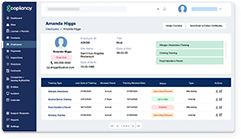
Target staff credentials inventoried during diligence. Pre-close coordination ensures credentials remain valid through close. Day-one staff continuity confirmed.
Structured 90-180 day integration workflows bring acquired locations to acquirer baseline. Documentation reconstruction, credential verification, system migration, and renewal cycle reconciliation all tracked.
Post-close, acquired locations appear in consolidated portfolio reporting alongside legacy operations. Compliance baseline comparisons visible.
Restaurant groups consolidating through acquisition (large multi-concept restaurant operators including Landry’s, Inspire Brands, Bloomin’ Brands, SBE Restaurant Group, Earl Enterprises), dealer group roll-ups, craft beverage M&A, healthcare practice consolidation, and childcare operator consolidation all benefit from structured compliance integration.
M&A integration progress visible alongside core compliance status — license transfers in progress, credential verifications, baseline alignment, renewal cycle reconciliation. Ready for ownership and lender review.
Frequently Asked Questions
Does Copliancy file license transfer applications?+
No. Transfer applications and amendments are filed by the acquirer or licensing counsel directly with state and federal agencies. Copliancy is the internal system of record — tracking applications in progress, capturing resulting licenses, and managing the integration lifecycle.
How does Copliancy support due diligence?+
Structured templates for license inventory, credential inventory, and compliance gap analysis. Target data captured during diligence informs the transfer process timeline and post-close integration plan.
Can Copliancy track multi-layer approvals?+
Yes. Manufacturer franchise approvals (auto dealers), TTB change-of-control (craft beverage), healthcare board approvals, and similar multi-layer approvals each tracked with timelines and critical path visibility.
What about post-close integration?+
Structured workflows bring acquired locations to acquirer baseline over 90-180 days. Documentation reconstruction, credential verification, system migration, and renewal cycle reconciliation all tracked with assignments and deadlines.
Does Copliancy support consolidation reporting post-close?+
Yes. Acquired locations appear in consolidated portfolio reporting alongside legacy operations. Compliance baseline comparisons, renewal pipelines, and aggregate trends visible across the combined portfolio.
Is Copliancy used by acquirers today?+
Multi-location acquirers in restaurant groups, dealer groups, craft beverage, healthcare practice consolidation, and childcare consolidation face similar compliance integration challenges. Copliancy’s flexible architecture supports M&A compliance integration including due diligence, transfer process tracking, and post-close integration to acquirer baseline.