











Liquor License Management Software for Restaurant Groups
Liquor licenses are the most operationally critical — and most punishing — licenses in the restaurant business. Miss one renewal and you lose your highest-margin revenue stream overnight. Multiply that risk across 50, 100, or 500 locations spread across multiple states, and manual tracking becomes a liability the business can’t afford. This guide breaks down how restaurant groups manage liquor licenses at scale, the unique complications of multi-state liquor compliance, and how Copliancy automates the workflow used by national operators like Outback Steakhouse, Buffalo Wild Wings, BJ’s Restaurants, and Texas Roadhouse.
Liquor licenses are the highest-stakes operational licenses in food service — they generate the most revenue per square foot and carry the most severe penalties if mismanaged. For restaurant groups operating across multiple states, liquor compliance involves navigating 50+ unique regulatory regimes, each with its own renewal cycle, documentation requirements, fingerprinting rules, and reporting obligations. Manual tracking fails predictably: missed renewals shut down bar revenue overnight, expired licenses void liquor liability insurance, and audit-day fire drills become a quarterly ritual. Effective liquor license management requires centralized records with state-specific metadata, automated multi-stage renewal notifications, document storage with version control, payment workflows integrated with accounts payable, recurring compliance display checks, and role-based access for general managers. Copliancy delivers all of this as part of its license and permit management platform — trusted by major restaurant groups including Outback Steakhouse, Buffalo Wild Wings, BJ’s Restaurants, Texas Roadhouse, Bloomin’ Brands, Inspire Brands, Cooper’s Hawk, Bubba Gump Shrimp Co, Landry’s, and many more.
Why Liquor Licenses Matter More Than Other Permits
Restaurant operators manage many licenses — business licenses, health permits, food handler certifications, fire safety documents, signage permits. But liquor licenses sit in a category of their own. They drive a disproportionate share of revenue, carry disproportionate regulatory weight, and create disproportionate operational disruption when they lapse.
The math is straightforward: in casual and full-service restaurants, alcohol typically represents 25-40% of total revenue and a much higher share of profit margin. When a liquor license lapses, that entire revenue stream stops — immediately. Food service can continue, but the location operates at a small fraction of its normal economics. For a single location, that’s a five- to six-figure problem per week of lapse. For a multi-location operator, the exposure compounds.
The regulatory weight is similarly heavy. Liquor licensing authorities — typically state alcoholic beverage control (ABC) commissions — have substantial enforcement power. Violations are formally recorded against the license, accumulate over time, and can result in permanent revocation. Restaurants that develop a track record of compliance failures face higher renewal scrutiny, longer approval times for new locations, and reputational damage with regulators that lingers for years.
And the documentation requirements are unique. Liquor renewals frequently require:
- Current general liability and liquor liability insurance certificates with specific minimum coverage amounts
- Current food service permits (the liquor license often depends on the underlying food permit being valid)
- Fingerprinting and background checks for licensed individuals — sometimes annually, sometimes triennially
- Manager/server certification documentation (e.g., TABC in Texas, ABC in Virginia)
- Sales reporting for the prior reporting period
- Site plan or floor plan documentation showing licensed premises
State-by-State Variation Is the Core Challenge
The single biggest reason manual liquor license tracking breaks down for multi-state restaurant groups is that no two states handle liquor the same way. Some examples of how dramatically the landscape varies:
Some states (like Pennsylvania, Utah, Virginia) operate as “control states” where the government directly sells spirits. Others use a pure license model. The compliance implications differ significantly.
Annual renewal is most common, but several states use biennial or triennial cycles. Some require pre-renewal hearings; others auto-renew with payment.
Restaurant beer-and-wine vs. full liquor vs. caterer vs. brewpub vs. taproom — each state defines license classes differently, with different rules.
Some states require fingerprinting only at initial licensing. Others re-fingerprint on every renewal. Others fingerprint only owners; others fingerprint every manager.
Several states (Texas, Florida, Pennsylvania, others) cap the number of liquor licenses available per county or population. Existing licenses can be worth $50,000-$500,000+ as transferable assets.
In addition to state licensing, many cities and counties layer in local requirements — additional permits, additional fees, additional reporting.
For a restaurant group operating in 15 states, this means maintaining detailed knowledge of 15+ regulatory regimes — with local variations layered on top — and translating that knowledge into a renewal workflow that captures the right documents, fees, and timing for each location individually. Spreadsheets simply can’t carry that complexity.
Where Things Go Wrong
When liquor license management fails at multi-location restaurant groups, the root causes are consistent:
- The renewal calendar wasn’t centralized. Different locations had different “owners” of their liquor licenses, each tracking renewals their own way. When ownership shifted (manager turnover, ops restructure), licenses fell through the cracks.
- Supporting documents weren’t ready. Liquor renewals require current insurance, current food permits, current fingerprint clearance — all of which have their own renewal cycles. When those expired and weren’t renewed, the liquor renewal couldn’t proceed.
- The payment workflow failed. Liquor renewal fees range from a few hundred to several thousand dollars per location. Finance approval cycles sometimes ran longer than the renewal window.
- State-specific deadlines were missed. Each state has its own renewal window — some require renewal 90 days before expiration, others won’t accept renewals more than 30 days out. Without state-specific tracking, the same generic 60-day reminder missed half the deadlines.
- The license wasn’t posted at the location. Even when renewed correctly, the new license needs to be physically displayed at the licensed premises. Inspectors arriving to find an expired license on the wall write violations regardless.
- The general manager couldn’t find a copy. When inspectors arrived unannounced, the GM needed an instant copy of the current license. Email-based workflows produced delays that themselves created violations.
A Liquor License Workflow That Scales
National restaurant groups use a structured workflow for liquor license management. The pattern works because it removes every single one of the failure modes above:
-
1
Inventory Every License Across the Portfolio
Document each location’s current liquor license: state, license class, license number, issuing authority, expiration date, fee, renewal window, required documents, fingerprinting requirements, posted location, and license photo.
-
2
Configure State-Specific Renewal Workflows
Each state’s renewal pattern is different. Configure renewal timing, document checklists, and payment workflows per state rather than applying a generic schedule.
-
3
Track Supporting Documents on Their Own Cycles
Insurance certificates, food permits, fingerprint clearances, and manager certifications all expire on their own schedules. Track each as a separate record so when liquor renewal time comes, every supporting document is current.
-
4
Automate Multi-Stage Renewal Alerts
Notifications fire at 90, 60, 30, and 7 days before each liquor expiration — to multiple recipients, with escalation rules built in.
-
5
Integrate Payment With Accounts Payable
Generate check requests inside the license platform. Route approvals through AP. Track payment status against renewal deadlines so finance bottlenecks become visible before they cause lapses.
-
6
Run Compliance Display Checks
After renewal, automated checks verify the current liquor license is physically posted at the location. This catches the failure mode where the old license never came down from the wall.
-
7
Give General Managers Self-Service Access
When an ABC officer or local inspector arrives unannounced, the GM needs a current liquor license copy in seconds — not a Slack message to corporate.
How Copliancy Automates Liquor License Management
Copliancy is purpose-built for the workflow above. The platform handles every component:
License and Application Tracking
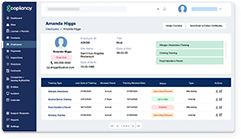
Copliancy tracks every liquor license in detail: license number, issuing authority, license class, expiration date, renewal notice date, payment history, and the actual license document. Pending applications are tracked separately from active licenses. When an application is approved, Copliancy automatically promotes the record to active status.
State-Specific Workflows
Different state requirements are encoded into the workflow. Texas TABC renewals follow Texas rules; California ABC renewals follow California rules; New York SLA renewals follow New York rules. Renewal lead times, document checklists, and notification routing are configured per jurisdiction rather than forced into a single generic schedule.
Document Storage and Integration
Copliancy stores all liquor-related documents — the license itself, insurance certificates, food permits, fingerprint clearances, manager certifications — in one place. Integrations with SharePoint and Dropbox ensure documents are never lost. Smart notes leverage tagging and notifications. Automations trigger upon document upload.
Bulk Renewal Processing
For groups with 50+ locations, Copliancy’s Bulk Renewal feature lets compliance teams process renewals across multiple locations in one workflow instead of clicking through each license individually.
Payment Tracking
Generate check requests directly from the license record or integrate with your accounts payable software. Associate line items for license fees, late fees, and processing fees. Use payment statuses and custom approval flows to ensure payments are approved before they go out.
One-Click Downloadable Licenses
General managers can locate, download, and print current liquor license copies in seconds. Permissions are role-based: GMs can view and download their location’s licenses but cannot edit underlying records.
Compliance Checks
Copliancy automates recurring compliance checks that verify the correct liquor license is displayed at the licensed premises — preventing the costly violations that come from missing or expired displays.
Restaurant Brands That Use Copliancy
Copliancy is trusted by major restaurant brands and groups, including: Outback Steakhouse, Buffalo Wild Wings, BJ’s Restaurants, Texas Roadhouse, Bloomin’ Brands, Inspire Brands, Cooper’s Hawk, Snooze Eatery, sweetgreen, Panda Express, Jimmy John’s, Bubba Gump Shrimp Co, Landry’s, Saltgrass Steak House, McCormick & Schmick’s, Morton’s The Steakhouse, Del Frisco’s, Joe’s Crab Shack, Bonefish Grill, Carrabba’s Italian Grill, Fleming’s Prime Steakhouse, Brio, Bravo, Bertucci’s, Earl Enterprises, Buca di Beppo, Chart House, Bar Louie, RA Sushi, Kona Grill, STK Steakhouse, Sullivan’s Steakhouse, Eddie Merlot’s, Red Robin, Applebee’s, Logan’s, Chipotle, Krystal, Citizens Kitchen and Bar, Toca Madera, Tender Greens, Tocaya, Baskin-Robbins, Dunkin’, Arby’s, Sonic, Beauty & the Burger, and many more.
Frequently Asked Questions
How does Copliancy handle the difference between state liquor authorities?+
Each state’s licensing authority (TABC, ABC, SLA, etc.) has its own renewal cycle, documentation requirements, and reporting obligations. Copliancy stores state-specific metadata with each license and configures renewal workflows per jurisdiction. A Texas TABC license gets Texas-specific reminders and document checklists; a California ABC license gets California-specific workflows. The platform handles every state in one system rather than requiring separate tools per state.
What happens if a liquor license expires?+
Consequences vary by state and license class, but typically include immediate cessation of alcohol service, mandatory restart of the application process (often with new fingerprinting and hearings), accumulated late fees, formal violations on the license record, and potential elevated scrutiny on future renewals. For high-volume operators, the operational cost of even a one-week lapse on a single location can run into five or six figures of lost revenue.
Does Copliancy track liquor liability insurance separately?+
Yes. Insurance certificates are tracked as separate records with their own renewal cycles. Because liquor renewals frequently require current insurance, Copliancy can link the insurance certificate to the underlying liquor license — so if the insurance is about to expire, the liquor license workflow knows to flag it before the renewal application is due.
Can general managers access liquor licenses for inspections?+
Yes, with role-based access controls. General managers and on-site supervisors can view and download their location’s current liquor license in seconds — without being able to edit or delete underlying data. When an ABC officer or inspector arrives unannounced, the GM produces the current license immediately rather than waiting on a corporate response.
How does Copliancy handle fingerprinting and background check requirements?+
Fingerprinting and background check documentation can be stored as supporting records linked to the relevant liquor license. When fingerprinting expires (in states that require periodic re-fingerprinting), Copliancy notifies the compliance team in advance of the next liquor renewal — so re-fingerprinting can be completed before the renewal application is filed.
Can Copliancy handle the entire restaurant compliance portfolio, not just liquor?+
Yes. Copliancy is an all-in-one platform covering liquor licenses, health permits, food handler certifications, business tax licenses, environmental and air quality permits, fats/oil/grease permits, fire alarm permits, signage and occupancy permits, employee training, lease and contract management, equipment repairs, inspections, and incident reporting. Restaurant groups typically consolidate all of this into one system rather than maintaining separate tools per compliance category.