











License Management for Cannabis Dispensary Multi-State Operators (MSOs)
Cannabis multi-state operators (MSOs) face one of the most complex regulatory environments in any US industry. With cannabis still federally Schedule I but legal in 38+ states for medical use and 24+ for adult use, MSOs operate across dramatically different per-state regulatory frameworks — each with its own license types, employee badging rules, seed-to-sale tracking system, security requirements, advertising restrictions, and tax structures. Public MSOs like Curaleaf, Cresco Labs, Trulieve, Green Thumb Industries, and Verano operate 100-200+ retail locations across 10-20 states. Private MSOs and regional operators face similar per-state complexity at smaller scale. This guide explains how cannabis dispensary MSOs handle compliance and how Copliancy supports the workflow.
Cannabis MSOs operate in the most regulatorily fragmented industry in the United States. Cannabis remains federally Schedule I under the Controlled Substances Act, but state-level legal frameworks exist in 38+ states for medical use and 24+ for adult use. Each state operates its own licensing framework with distinct license types (cultivator, processor, distributor, dispensary, microbusiness, social equity, transporter), application processes, ownership requirements (some states cap out-of-state ownership; some impose residency requirements), and regulatory agencies. Every state operates its own seed-to-sale tracking system, with Metrc dominant in 20+ states and BioTrack, MJ Freeway, and others used in others. Employee badging requirements differ per state — some states require state-issued badges through background checks; others delegate to operators. Security and surveillance requirements (camera coverage, retention periods, vault standards) vary by state. Advertising restrictions are severe but inconsistent. Tax structures include the federal 280E disallowance of business deductions, state cannabis excise taxes, local cannabis taxes, and sales tax. Banking limitations require cash-heavy operations with related security requirements. MSO acquisitions of state-licensed operators happen frequently, requiring per-state regulatory approval and integration of acquired operations. Copliancy supports cannabis MSOs with per-state license tracking, per-location compliance, per-employee credentialing and badging, security documentation, and aggregate reporting for executive, board, and (for public MSOs) regulatory disclosure.
Cannabis MSO Regulatory Complexity
Cannabis MSO compliance differs fundamentally from other multi-state retail operations:
- Federal Schedule I status. Despite state legalization, cannabis remains federally controlled. Federal banking restrictions, IRS Section 280E tax treatment, and federal trademark unavailability all flow from this status.
- Per-state licensing frameworks. Each state operates its own cannabis program with distinct license types, application processes, and operating rules. No federal preemption or interstate harmonization.
- State-tracked seed-to-sale. Every state requires seed-to-sale tracking through a state-mandated system (Metrc in most states, BioTrack in others). Daily reporting of plant tracking, manufacturing, transfers, and sales.
- Employee badging. Most states require employee badges or state agent registrations with background checks. Per-state, per-employee, with state-specific renewal cycles.
- Security and surveillance. 24/7 camera coverage requirements with specific retention periods. Vault and storage standards. Alarm system requirements. State and local approvals.
- Banking limitations. Federal Schedule I status creates banking complications. Most operators face higher cash-handling requirements with related security implications.
- 280E tax exposure. Federal IRS Section 280E prohibits ordinary business deductions for cannabis operations. Significant tax burden. Compliance documentation matters for audits.
- Advertising restrictions. Severe restrictions on cannabis advertising per state. Content, placement, audience targeting all regulated.
- Public MSO disclosure. Public MSOs face regulatory reporting requirements (10-Ks, 10-Qs) where regulatory compliance status is material disclosure.
Per-State Variation in License Types
The cannabis license landscape varies dramatically state to state. A few representative examples:
Marijuana Enforcement Division (MED) issues retail marijuana store, medical marijuana center, cultivation, manufacturer, transporter licenses. Annual renewal. Owner residency requirements modified over time.
Department of Cannabis Control (DCC) issues retail (Type 9, Type 10), distribution, manufacturing, cultivation licenses. Annual renewal. Local approval required for all licenses.
Illinois Cannabis Regulation Oversight Office. Dispensary, craft grower, infuser, transporter licenses. Social Equity license program. Aggressive enforcement.
Cannabis Control Commission (CCC). Retail marijuana establishment, medical marijuana treatment center, cultivator, product manufacturer licenses. Host community agreement required.
Cannabis Regulatory Commission (CRC). Class 1-5 retailer, cultivator, manufacturer, wholesaler, distributor licenses. Social equity priority.
Office of Cannabis Management (OCM). Adult-use retail dispensary (CAURD), microbusiness, cultivator, processor licenses. Phased rollout with social equity priority.
Florida Department of Health Office of Medical Marijuana Use. Medical Marijuana Treatment Center (MMTC) licenses — vertically integrated structure (cultivation through retail under one license).
Department of Health Medical Marijuana Program. Grower/processor and dispensary permits. Medical-only at present (adult-use legislation pending).
Arizona DHS Marijuana Program (recreational and medical). Nevada Cannabis Compliance Board (recreational and medical). Both have established programs with regular renewals.
Seed-to-Sale Tracking
Every state-licensed cannabis operation must report through a state-mandated seed-to-sale tracking system:
- Metrc dominance. Metrc is the state-mandated system in 20+ states including Colorado, California (in transition), Michigan, Massachusetts, Maryland, Maine, Missouri, Montana, Oklahoma, Oregon, Nevada (partial), Ohio (medical), and others.
- BioTrack and others. BioTrack used in some states (Hawaii historically, Illinois partial, Washington state historical). Other proprietary or hybrid systems in remaining states.
- RFID tag tracking. Most systems use RFID tags applied to plants, packaging, and products. Tag-level accountability through the entire supply chain.
- Daily reporting. Cultivation activity, manufacturing batches, transfers between licensees, retail sales all reported daily.
- Inventory reconciliation. Physical inventory must reconcile to system records. Discrepancies trigger investigation and potential enforcement.
- State audit access. State regulators have audit access to seed-to-sale records. Audit findings can trigger license action.
MSO-Specific Challenges
MSOs operating in 10-20 states with cultivation, manufacturing, distribution, and retail licenses face complex inventory. Each license with its own renewal cycle, conditions, and reporting requirements.
MSOs grow significantly through acquisition of state-licensed operators. Each acquisition requires per-state regulatory approval (60-180+ days) plus integration of acquired operations to MSO standards.
Most states require ownership disclosure with thresholds for “true party of interest” or beneficial ownership. MSO corporate structures must be documented per state.
Employees moving between states need separate state-specific badges. No reciprocity. Background checks repeated. MSOs with cross-state employee movement face administrative burden.
280E tax exposure requires careful documentation of cost of goods sold vs. non-deductible operating expenses. Audit-ready documentation per state operation matters.
Public MSOs disclose regulatory compliance status in SEC filings (where US-listed) and TSX/CSE filings (where Canadian-listed). Material compliance issues require disclosure.
Several states (IL, NY, NJ, others) operate social equity license programs with specific ownership and operating requirements. MSO partnerships with social equity licensees require careful structuring.
Enforcement intensity varies by state. Some states (IL, NJ) enforce aggressively; others rely more on operator self-reporting. MSO compliance posture adapts per state.
Federal Schedule I status creates banking and insurance complications. Cash handling, vault standards, and cyber/general liability insurance documentation matter.
How Copliancy Handles Cannabis MSO Compliance
Each state license tracked with type, renewal cycle, conditions, and regulatory agency. Cultivation, manufacturing, distribution, retail licenses all in one system across all states of operation.
Each retail location, cultivation facility, and manufacturing site has complete records of state license, local approvals, security plans, surveillance documentation, fire safety, and operational permits.
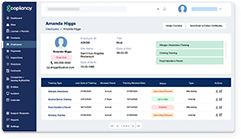
Every employee tracked with state-specific badges or agent registrations. Background check status, renewal cycles per state. Integration with HR systems keeps rosters current.
Camera coverage maps, retention compliance, alarm system records, vault certifications per location. Documentation ready for state inspection.
Host community agreements, local cannabis license, conditional use permits, certificates of occupancy tracked alongside state licenses. Local renewal cycles managed.
When MSOs acquire state-licensed operators, integration workflows inventory existing licenses, employee badges, and operating conditions. Regulatory approval process tracked through closing. Post-close integration to MSO standards routed.
Per-state ownership disclosures maintained with refresh cycles. Corporate structure changes tracked across all state filings. Beneficial ownership reporting current.
License certificates, agency correspondence, inspection reports, security plans, employee badges, ownership disclosures, and audit responses attached to records. SharePoint and Dropbox integrations supported.
Portfolio reporting across the MSO — per-state license status, employee badging compliance, security documentation, renewal pipeline. Ready for executive, board, and (for public MSOs) regulatory disclosure support.
Frequently Asked Questions
Does Copliancy integrate with Metrc or BioTrack?+
Copliancy is the compliance management system of record — tracking licenses, employee credentials, security documentation, and renewals. Metrc and BioTrack are state-mandated seed-to-sale systems for plant and product tracking. The two serve different purposes. Documentation showing Metrc/BioTrack compliance status can be tracked within Copliancy.
How does Copliancy handle per-state employee badging?+
Each employee is tracked with state-specific badges or agent registrations. Background check status, issue dates, renewal dates per state. Employees working across multiple states have separate badge records per state. Integration with HR systems keeps rosters current as people are hired and transferred.
Can Copliancy handle MSO acquisitions?+
Yes. Site due diligence and acquisition workflows support MSO acquisitions of state-licensed operators — checklists for license inventory, employee badge audit, security documentation review, ownership disclosure preparation, and post-close integration. State regulatory approval process (typically 60-180 days) tracked with milestone visibility.
Does Copliancy support per-state ownership disclosure?+
Yes. Each state’s ownership disclosure requirements documented with current disclosures maintained. Corporate structure changes propagated to per-state disclosures. Beneficial ownership thresholds tracked per state.
What about security and surveillance documentation?+
Camera coverage maps, retention compliance, alarm system records, vault certifications tracked per location. State-specific security plan documentation maintained. Inspection-ready format supports state and local audits.
Is Copliancy used by cannabis MSOs today?+
Copliancy’s flexible architecture supports cannabis MSO operations including per-state licensing, per-location compliance, per-employee badging, security documentation, and aggregate reporting. The compliance domain shares structure with other multi-state regulated operations Copliancy supports.