











Illinois Liquor License Renewals & Local Compliance Tracking
Illinois operates a dual-layer liquor licensing system that puts most of the regulatory weight on local jurisdictions. The Illinois Liquor Control Commission (ILCC) issues state retail licenses, but cities and counties retain authority over local licenses, hours, density limits, and operating conditions. Chicago alone runs one of the country’s most complex municipal licensing programs through its Department of Business Affairs and Consumer Protection (BACP). Multi-location operators in Illinois manage state ILCC licenses, local municipal licenses, BASSET (Beverage Alcohol Sellers and Servers Education and Training) certifications per employee, Chicago-specific licenses for restaurants and bars, and per-jurisdiction reporting requirements. This guide explains how multi-location operators handle Illinois compliance and how Copliancy supports the workflow.
Illinois liquor licensing centers on a dual-layer system: the Illinois Liquor Control Commission (ILCC) issues state retail licenses, and local jurisdictions (cities, villages, counties) issue local licenses with their own conditions. Most operational authority lives at the local level — Chicago alone has dozens of license classes through its Department of Business Affairs and Consumer Protection (BACP), each with specific operating conditions. BASSET certification is required statewide for anyone selling or serving alcohol, with per-employee tracking and three-year renewal. Multi-location operators with locations across Chicago, suburban Cook County, and downstate Illinois face dramatically different local rules per location. The base ILCC license is the foundation, but the local license — particularly in Chicago, Evanston, Oak Park, and other home-rule municipalities — defines what the operator can actually do. Effective Illinois compliance requires centralized tracking per location of both ILCC and local licenses, per-employee BASSET certification with expiration alerts, document management for certificates and inspection reports, and aggregate visibility across the portfolio. Copliancy is used by Illinois-based and Illinois-operating multi-location groups including BJ’s Restaurants, Bar Louie, Cooper’s Hawk, Buffalo Wild Wings, Portillo’s, and others.
Illinois Liquor Licensing Structure
Illinois operates a dual-layer system that distinguishes it from most other states:
- State ILCC license. The Illinois Liquor Control Commission issues a state retail license. The state license is essentially a registration — it confirms the operator is qualified to hold a liquor license under state law. Annual renewal.
- Local license. The actual operational license comes from the local jurisdiction — the city, village, or county where the operation is located. Local licenses control hours, density restrictions, allowed activities, and renewal terms.
- Home-rule municipalities. Illinois cities of 25,000+ population (and smaller cities that have adopted home-rule status) have broad authority to regulate liquor service. Chicago, Evanston, Oak Park, Naperville, Schaumburg, and dozens of others operate distinct licensing systems.
- Dry vs. wet local option. Local jurisdictions can vote dry or impose substantial restrictions on alcohol sales. Operators expanding into new jurisdictions must verify wet status and applicable local rules.
- BASSET certification. Statewide requirement for anyone selling or serving alcohol. Per-employee certification valid for three years. Required as a condition of license issuance and renewal.
The practical consequence: an Illinois multi-location operator with locations in Chicago, Schaumburg, and Naperville carries three completely different sets of local rules on top of the same ILCC license. Tracking what each location can actually do requires understanding both layers.
State vs. Local: What Each Layer Controls
Confirms qualification under Illinois Liquor Control Act. Annual renewal. Required for any retail alcohol operation. Fee schedule by license class.
Operational authority. Hours of service, allowed activities, capacity limits, density restrictions. Renewal cycle varies by jurisdiction.
Local jurisdictions can impose closing time restrictions, food service requirements, entertainment limits, no-DJ rules, capacity caps, parking requirements.
Many local jurisdictions cap the number of liquor licenses available in their area. New applications may face wait lists or moratoriums.
Local rules often prohibit liquor service within specified distances of schools, churches, or residential zones. Distance requirements vary widely by municipality.
Some Illinois jurisdictions restrict or prohibit Sunday alcohol sales. Operators expanding to new jurisdictions must verify local Sunday rules.
Chicago BACP and Local License Classes
The City of Chicago Department of Business Affairs and Consumer Protection (BACP) operates one of the most complex municipal licensing programs in the country. Chicago restaurant and bar operators typically carry multiple licenses:
Base license for any food service operation in Chicago. Required regardless of whether alcohol is served.
For establishments where alcohol service is the primary activity (bars, lounges). Conditions on hours, food service ratio, and entertainment.
For restaurants where alcohol service is incidental to food service. More flexible than tavern license but with food service requirements.
Extends service hours beyond standard closing time (typically 2:00 AM standard, 4:00 AM late hour). Limited availability.
Off-premise sales for grocery stores, convenience stores, and liquor stores. Different fee structure than on-premise.
Required for any outdoor seating area serving alcohol. Capacity and operating hour conditions apply.
Required for venues with live entertainment, DJs, or amplified music. Capacity-based conditions and inspection requirements.
Annual permit for sidewalk seating. Seasonal availability with specific operating periods. Permit fees by area and table count.
Chicago operators also navigate ward-level community input on new applications, alderman holds on license issuance, and ongoing relationship management with local stakeholders. The Chicago Public Health Department conducts food safety inspections separately from BACP licensing.
BASSET Certification: Per-Employee Tracking
BASSET (Beverage Alcohol Sellers and Servers Education and Training) is the Illinois statewide certification required for anyone selling or serving alcohol. Key requirements:
- Mandatory for all alcohol servers. Bartenders, servers, retail clerks, and anyone with responsibility for alcohol service must hold a current BASSET certification.
- 120-day grace period for new hires. New employees may serve for up to 120 days before completing BASSET. Tracking the start date and the deadline matters.
- Three-year validity. Certifications are valid for three years and must be renewed before expiration.
- Per-employee records. Operators must maintain BASSET records per employee and produce them on demand during ILCC or local inspection.
- Required as license condition. Compliance with BASSET requirements is a condition of license issuance and renewal. Failure can affect license status.
Multi-location operators with hundreds of alcohol-serving employees track BASSET as a continuous workflow — certifications issued on hiring, expirations approaching at three-year intervals, terminations removing employees from active rosters. Integration with HR systems is essential.
Common Illinois Compliance Issues
ILCC and local renewals fall on different dates. Operators focused on one miss the other. Both must be current for active operation.
Three-year cycles spread expirations across the calendar. Without per-employee tracking, operators discover lapses during inspections.
Operators forget about local conditions — closing hours, food service requirements, entertainment restrictions. Inspections find violations and impose penalties.
Chicago locations require multiple licenses (food, tavern or COP-incidental, late hour, PPA, sidewalk café). Missing one license while others are current happens regularly.
Sidewalk café permits are seasonal in Chicago. Annual renewal must happen before patio season opens. Lapsed permits trigger immediate cease-of-service.
Operators planning new openings discover late that the target jurisdiction has hit density caps and applications are not being accepted.
How Copliancy Handles Illinois Compliance
Copliancy is used by Illinois-based and Illinois-operating multi-location operators including BJ’s Restaurants, Bar Louie, Cooper’s Hawk, Buffalo Wild Wings, and others. The platform handles Illinois-specific complexity:
ILCC state license and local municipal license tracked together per location. Both renewal dates surface in renewal alerts.
Chicago locations carry multiple BACP licenses simultaneously — retail food, tavern or COP, late hour, PPA, sidewalk café. Each tracked separately with its own renewal cycle.
Local license conditions (hours, food service requirements, entertainment limits) documented and visible to operations teams. Day-to-day operation aligns to conditions.
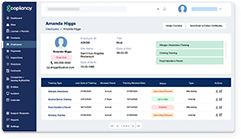
Every alcohol-serving employee tracked with BASSET certification date, expiration date, and renewal status. Integration with HR systems (Workday, ADP, BambooHR, Paychex) keeps employee data current.
New hires get tagged with hire date and 120-day deadline for BASSET completion. Alerts surface before the deadline so certifications happen on time.
New location applications tracked through ILCC state review, local jurisdiction review, and final approval. Density cap and moratorium status verified before significant investment.
License certificates, BASSET certificates, inspection reports, and correspondence attached to records. SharePoint and Dropbox integrations supported.
ILCC enforcement actions, local liquor commission citations, BACP inspections, and Chicago Public Health inspections all tracked per location with remediation deadlines.
Portfolio reporting across Illinois — state and local license status, BASSET compliance rates, upcoming renewals, and inspection patterns. Ready for ownership and board review.
Frequently Asked Questions
Does Copliancy file ILCC or local license applications?+
No. ILCC applications are filed through the state portal. Local applications are filed with the relevant city or village. Copliancy is the internal system of record — tracking applications in progress, capturing resulting licenses, scheduling renewals, and managing the full lifecycle.
How does Copliancy handle BASSET certification tracking?+
BASSET certifications are tracked per employee with issue date, expiration date (3 years), and certifying body. Integration with HR systems (Workday, ADP, BambooHR, Paychex) and POS/scheduling systems (Crunchtime, R365, 7shifts, HotSchedules, Deputy) keeps the employee roster current. New hire 120-day deadlines and 3-year renewal alerts surface before lapses occur.
Can Copliancy track Chicago BACP multi-license environments?+
Yes. A single Chicago location often carries 4-6 distinct BACP licenses (retail food, tavern or COP, late hour, public place of amusement, sidewalk café, package goods). Each license is tracked separately with its own renewal cycle and conditions. The location record shows the complete license stack.
What about local conditions and operating restrictions?+
Local conditions — closing hours, food service requirements, entertainment restrictions, capacity limits — are documented per license and visible to operations teams. When changes to operations are proposed, the system flags whether changes conflict with current conditions.
Does Copliancy handle home-rule municipalities differently?+
Home-rule municipalities (Chicago, Evanston, Oak Park, Naperville, and others) have broader authority to set their own rules. Copliancy tracks each municipality’s specific license classes, renewal cycles, and conditions independently. The same operator can have completely different license structures across municipalities.
Is Copliancy used by Illinois operators today?+
Yes. Illinois-based and Illinois-operating multi-location operators including BJ’s Restaurants, Bar Louie, Cooper’s Hawk, Buffalo Wild Wings, and many others use Copliancy to manage their Illinois compliance.