











Colorado Liquor License Compliance: State LED & Dual-Authority Local Approval
Colorado operates a dual-licensing authority system where every liquor license requires both state Liquor and Tobacco Enforcement Division (LED) approval and local government approval. The state agency, housed within the Department of Revenue, sets statewide standards while local governments — cities, counties, or designated local licensing authorities — handle application processing and have authority to suspend or revoke licenses after a hearing. Multi-location restaurant, bar, and retail operators in Colorado navigate Hotel and Restaurant licenses, Tavern licenses, Beer and Wine licenses, Brew Pub licenses, and various specialty classes — each requiring coordinated state and local action. This guide explains how multi-location operators handle Colorado compliance and how Copliancy supports the workflow.
Colorado’s alcohol regulatory framework operates under dual licensing authority. The Liquor Enforcement Division (LED) within the Department of Revenue serves as the state licensing authority, while local licensing authorities — the governing body of a city or county, or an authority designated by local charter, ordinance, or resolution — handle the application process at the local level. Retailers must first obtain approval from the local licensing authority before the state license is issued. Both layers must approve initial issuance, and both can suspend or revoke licenses. Annual renewals run through both layers. Major Colorado license classes include Hotel and Restaurant (the most common multi-location restaurant license), Tavern, Beer and Wine, Brew Pub, Liquor-Licensed Drugstore, and various manufacturer licenses. Distance restrictions apply — licensees within 500 feet of any public or parochial school or principal campus of any college, university, or seminary may apply for a change of location within the same prohibited area but may not apply for change of location within any other prohibited area. Denver, Boulder, Colorado Springs, and other major cities each have distinct local processes and timelines layered on the state framework. Copliancy supports Colorado operators with per-location dual-authority tracking, distance compliance documentation, payment tracking with AP integration, and aggregate visibility for ownership review.
Colorado LED and Dual-Authority Licensing Structure
Colorado operates differently from most other states in placing operational weight equally on state and local layers:
- Liquor and Tobacco Enforcement Division (LED). Within the Colorado Department of Revenue, the LED serves as the state licensing authority. May grant, suspend, or revoke licenses or permits; hear complaints; enforce laws; approve responsible alcohol vendor training programs; and make rules.
- Local licensing authorities. The governing body of a city or county, or an authority designated by local charter, ordinance, or resolution. Local authorities process retail applications and may suspend or revoke licenses after a hearing.
- Retailer-first local approval. Retailers must first obtain approval from the local licensing authority before the state license is issued. The state cannot issue a license that the local authority has denied.
- Annual renewals through both layers. State and local layers must both renew. Either can deny or condition renewal.
- Distance restrictions. Statutory distance restrictions from schools, colleges, universities, and seminaries (500 feet for many categories). Change-of-location applications limited within prohibited areas.
- Responsible alcohol vendor program. LED approves responsible alcohol vendor training programs. Server training widely required by employers and as mitigation in disciplinary cases.
Colorado License Types Multi-Location Operators Track
Sale of beer, wine, and spirits for on-premises consumption in hotels and restaurants. The most common multi-location restaurant license. Annual renewal through state and local layers.
Sale of beer, wine, and spirits for on-premises consumption in bars and taverns. Distinct food service requirements compared to Hotel and Restaurant.
Sale of beer and wine only (no spirits) for on-premises consumption. Lower entry cost. Common for casual restaurant concepts.
Allows sale and on-premises consumption of beer, wine, and spirits, plus manufacture of malt beverages on the licensed premises. Manufactured beer may be sold for on-premises consumption or to wholesalers.
Allows certain drugstores to hold liquor licenses with multiple locations permitted under statute. Specific to Colorado’s regulatory framework for chain drugstore alcohol sales.
Restaurant license linked to a Colorado limited winery. Authorizes sale of the licensed winery’s products and other vinous and malt liquor for on-premises consumption.
For small lodging establishments with limited alcohol service. Specific operational requirements around food service and guest service.
Authorizes alcohol service in optional premises designated within a larger facility (e.g., resort, sports facility). Useful for operators with multi-venue properties.
Temporary licenses for events. Available through coordinated local-and-state process. Useful for catering and event operations.
The Dual-Authority Application and Renewal Process
Local Application First
Applications are submitted to the local licensing authority. Local authority handles processing, public notice, hearings, and recommendation to the state. Some jurisdictions process applications quickly; others have multi-month timelines.
Public Notice and Hearings
Local authorities typically require public notice with posted signs at the premises and published notice. Hearings may include neighborhood opposition, business plan presentation, and operational conditions negotiation.
Distance Compliance Verification
Distance from schools, colleges, universities, and seminaries verified during application. Locations within 500-foot prohibited areas require careful application strategy and may be restricted from change-of-location moves to other prohibited areas.
Local Approval and Recommendation
Local authority approves the application (with conditions, where applicable) and forwards recommendation to the state. Conditions imposed at the local level follow the license through operation and renewal.
State LED Approval
LED reviews the application with the local approval. State background investigation and source-of-funds review conducted. State license issued after both layers complete.
Annual Renewal Through Both Layers
Each year the license must renew through both local authority and state LED. Both fees paid. Either layer can deny or condition the renewal. Both must complete before license year-end.
Denver, Boulder, Colorado Springs, and Local Specifics
Each major Colorado city operates its local licensing process distinctly:
- Denver Department of Excise and Licenses. Operates Denver’s local licensing process. Application timeline can run 3-6 months. Active enforcement on hours, capacity, and conditions.
- Boulder. Local licensing through the city clerk. Specific Boulder rules including limitations on certain license types and distance restrictions stricter than state minimums.
- Colorado Springs. Local licensing through the city clerk. Distinct local conditions and renewal timelines.
- Fort Collins and Northern Colorado. Each Northern Colorado jurisdiction operates its own process. Multi-location operators handle multiple local relationships.
- Resort communities (Aspen, Vail, Telluride, Steamboat). Tourism-focused jurisdictions with seasonal considerations. Some have specific resort area license categories.
- County-level licensing. Unincorporated areas fall under county licensing authorities. County boards of commissioners often serve as local authorities.
Common Colorado Compliance Issues
Operators complete state renewal but miss local renewal (or vice versa). Both must be current; either can deny renewal.
A new school or college campus within distance restriction range can affect renewal. Periodic verification of distance compliance matters for portfolio operators.
Conditions imposed at initial approval (hours, food service, entertainment) get forgotten over time. Renewal reviews surface violations.
Operators in 500-foot prohibited areas face restrictions on change-of-location to other prohibited areas. Relocation planning must verify allowable destinations.
Responsible alcohol vendor training documentation must be available during inspection or disciplinary review. Documentation gaps surface during enforcement actions.
Operators with locations across Denver, Boulder, Fort Collins, Colorado Springs, and resort communities handle multiple local processes simultaneously. Without centralization, processes diverge.
How Copliancy Handles Colorado Compliance
State LED license and local authority license tracked together per location. Both renewal dates surface in alerts. Both fees flow through AP. Either layer’s issues surface together.
Conditions imposed at initial local approval (hours, food service, entertainment) documented and visible to operations teams. Changes to operations flagged against conditions.
Distance to schools, colleges, universities, and seminaries documented per location. Where new schools or colleges open within restriction range, the system flags potential renewal impact.
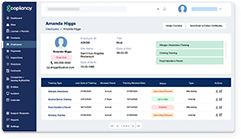
Responsible alcohol vendor training tracked per employee with issue and expiration dates. Integration with HR systems keeps employee data current.
Each location’s local licensing authority documented — Denver, Boulder, Fort Collins, Colorado Springs, resort communities, counties. Local-process specifics visible during renewals and operational changes.
For location changes, the system tracks whether the new location is within a prohibited area and whether change-of-location is permissible under current rules.
State and local renewal fees flow through AP approval. Both layers visible per location. Eliminates partial renewal completion.
License certificates, local approval letters, conditions, server training certificates, inspection reports attached to records. SharePoint and Dropbox integrations supported.
Portfolio reporting across Colorado — license status by jurisdiction, dual-authority renewal status, distance compliance, server training rates. Ready for ownership and counsel review.
Frequently Asked Questions
Does Copliancy file CO LED or local applications?+
No. Local applications are filed with the relevant local licensing authority. State applications process through LED. Copliancy is the internal system of record — tracking applications in progress, capturing resulting licenses, scheduling renewals, and managing the lifecycle.
How does Copliancy handle the dual-authority renewal?+
Each location is configured with both local authority renewal cycle and state LED renewal cycle. Alerts surface for both. The system tracks each as a distinct compliance event so partial renewal completion is visible.
Can Copliancy track local board conditions?+
Yes. Conditions imposed at initial local approval (hours, food service, entertainment) documented per license. Operations changes that conflict with conditions get flagged. Modification workflows support returning to local board for changes.
What about distance restriction verification?+
Distance to schools, colleges, universities, and seminaries documented per location. Periodic re-verification supported. New institutions opening within range trigger alerts about potential renewal impact.
Does Copliancy support Colorado server training documentation?+
Yes. Responsible alcohol vendor training tracked per employee with certification dates and renewal cycles. Integration with HR systems keeps employee rosters current.
Is Copliancy used by Colorado operators today?+
Multi-location operators with Colorado operations including restaurant groups, hotel groups, and retail operators use Copliancy to manage CO compliance alongside broader multi-state operations.