











Automotive Dealership Multi-State License & DMV Compliance Software
Multi-location auto dealer groups — from publicly-traded national operators (Lithia Motors, AutoNation, Group 1 Automotive, Sonic Automotive, Penske Automotive Group, Asbury Automotive, Hendrick Automotive Group) to large regional dealer groups — face one of the most fragmented and document-heavy compliance environments in retail. Per-state DMV dealer licenses (every state operates differently), per-location franchise approvals from manufacturers, surety bonds scaled to expected sales volume, per-salesperson licenses where required, dealer-operator qualification testing, repair facility licensing, finance and insurance regulations, and consumer protection compliance multiply across portfolios spanning dozens of states and hundreds of rooftops. This guide explains how multi-location auto dealer groups handle compliance and how Copliancy supports the workflow.
Multi-state auto dealer groups face a compliance environment that scales dramatically with rooftop count and state coverage. Every state operates its own DMV dealer licensing framework with distinct license types, application processes, fee structures, and inspection requirements. Texas requires a General Distinguishing Number (GDN) per dealer plus a Franchise License per franchise showroom; New York’s DMV scales surety bonds based on annual sales volume ($20K for 50 or fewer vehicles, $100K for more than 50, $50K for franchise dealers); California requires pre-licensing education and dealer-operator examination through the DMV. Virginia requires dealer-operator qualification testing administered at DMV customer service centers. Maryland requires franchise approval letters from each manufacturer. Multi-state dealer groups also track per-salesperson licenses where states require them, repair facility licensing (separate from dealer licensing in some states), title-and-registration compliance, and dealer plate inventory and usage rules. Franchise dealers carry additional manufacturer-required documentation including franchise agreements, sales operating standards, and brand audit requirements. Acquisitions of dealer rooftops trigger per-state regulatory approval processes that can take 30-120 days. Copliancy supports auto dealer groups with per-rooftop license tracking, per-state DMV documentation, surety bond status monitoring, salesperson credentialing, franchise approval documentation, acquisition integration workflows, and aggregate reporting for ownership and lender review.
Auto Dealer Group Compliance: The Multi-State Challenge
Auto dealer group compliance differs fundamentally from most other multi-location retail operations:
- Per-state DMV licensing. Every state operates its own dealer licensing framework. No federal preemption or harmonization. Each state has distinct license types, application processes, fees, and operational requirements.
- Per-rooftop licensing. Each dealership location requires its own dealer license. New stores require new applications. Relocations may trigger new inspections.
- Franchise approval per manufacturer. Franchise dealers carry separate franchise approvals from each manufacturer represented. Cross-brand dealer groups handle multiple manufacturer relationships per rooftop.
- Surety bonds tied to sales volume. Most states require surety bonds with amounts often scaled to annual sales volume. New York’s framework illustrates: $20,000 for dealerships selling 50 or fewer vehicles annually, $100,000 for more than 50, $50,000 for franchise dealers.
- Dealer-operator qualification. States including Virginia require dealer-operator qualification testing administered at DMV customer service centers. California requires pre-licensing education courses.
- Per-salesperson licenses. Some states require individual salesperson licenses. Background checks, fees, and renewals tracked per person.
- Acquisition activity drives complexity. Dealer group consolidation through acquisition is constant. Each acquisition requires per-state regulatory approval plus integration of acquired rooftops.
Per-State Licensing: Representative State Frameworks
General Distinguishing Number (GDN) per dealer location. Franchise License required per franchise showroom in addition to GDN. Multiple line-makes may be sold in the same showroom if listed on the franchise license. 10-day reporting requirement for opening, closing, or relocation.
Pre-licensing education course required from DMV-approved provider. Dealer-operator examination. Retail dealers must have dedicated commercial office space; wholesale dealers can use residential or commercial. Surety bond requirements. Bureau of Automotive Repair filing required for servicing dealers.
Dealer-operator qualification testing at DMV Customer Service Centers. $50 exam fee. Franchise and independent dealer distinctions. At least one qualified dealer-operator on premises required.
Volume-scaled surety bonds: $20K for 50 or fewer vehicles annually, $100K for more, $50K for franchise dealers. Trailers, motorcycles, vehicles over 10,000 lbs, ATVs, boats, snowmobiles exempt from bond.
Franchise approval letter from each manufacturer whose vehicles will be sold required. Insurance information form. Tax compliance verification through Department of Assessments and Taxation.
Annual fees for franchised motor vehicle dealer Certificate of Authority. Supplemental Certificate of Authority for additional locations. Three-year books and records retention requirement.
Department of Highway Safety and Motor Vehicles handles dealer licensing. Independent and franchise dealer distinctions. State-specific record retention requirements.
Every other state operates its own framework. Multi-state dealer groups learn each state’s specific requirements, processes, and renewal cycles. No reciprocity or harmonization.
Service-only locations or repair operations may require separate state licensing distinct from dealer licensing. California Bureau of Automotive Repair is a prominent example.
Franchise Dealer Considerations
Franchise dealers face additional compliance layers beyond state DMV requirements:
- Manufacturer franchise agreements. Each franchise agreement governs the dealer-manufacturer relationship. Documentation maintained per franchise per rooftop.
- Manufacturer brand standards. Manufacturers maintain brand standards beyond DMV requirements — facility specifications, signage standards, employee training, customer service standards.
- Manufacturer audits. Periodic manufacturer audits of dealer operations. Documentation supports audit findings and resolution.
- State franchise approval. Some states require state-level franchise approval in addition to manufacturer agreement. Maryland and others require franchise approval letters from manufacturers as part of state licensing.
- Multiple line-makes per rooftop. Texas (and other states) permit multiple line-makes in the same showroom under appropriate franchise licenses. Dealer groups with co-branded showrooms manage multiple franchise relationships per rooftop.
- Franchise transfer process. Dealer acquisitions involve manufacturer approval of franchise transfers in addition to state regulatory approval. Manufacturer approval timelines can extend deal closing.
- State franchise dealer protection laws. Most states have franchise dealer protection statutes governing the manufacturer-dealer relationship including termination protections, area of responsibility, and warranty work requirements.
Surety Bonds, Insurance, and Financial Compliance
Most states require surety bonds. Amounts vary by state and often scale with annual sales volume. Bonds must be renewed and maintained continuously; lapses trigger license issues.
States with volume-scaled bonds (like NY) require dealers to increase bonds when volume crosses thresholds. Without tracking, dealers operate under-bonded.
Per-state insurance requirements for vehicles held for sale or used for test drives. Coverage amounts and types vary.
Per-state workers’ compensation requirements for dealership employees. Documentation required at licensing.
Service operations require garage liability and garagekeepers insurance. Documentation maintained alongside dealer license records.
Dealers handle substantial consumer financial information. Cyber liability and general business liability documented for risk management.
How Copliancy Handles Auto Dealer Group Compliance
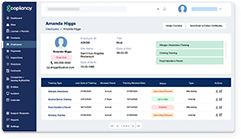
Each dealership location has complete records of state DMV dealer license, franchise approvals, surety bonds, repair facility licensing where applicable, sales tax registration, and local business license.
Each state’s specific licensing framework documented. Texas GDN + Franchise License structure, California pre-licensing education, Virginia dealer-operator testing, New York volume-scaled bonds all tracked appropriately.
Each rooftop’s surety bond tracked with amount, carrier, effective dates, and renewal dates. Volume thresholds tracked for states with volume-scaled bond requirements.
Manufacturer franchise agreements documented per rooftop per line-make. Cross-brand dealerships (multiple line-makes in one showroom) track multiple franchise relationships.
Where states require salesperson licenses, per-person credentials tracked with issue dates, renewal dates, and background check documentation. Integration with HR systems keeps rosters current.
When acquiring rooftops, integration workflows inventory existing licenses, franchise agreements, salesperson licenses, and surety bonds. Per-state regulatory approval timeline tracked through closing. Post-close integration to dealer group standards routed.
Qualified dealer-operators tracked per rooftop with examination certifications and continuing education. Vacancies in dealer-operator roles flagged before regulatory issues arise.
License fees, bond premiums, franchise fees, and insurance premiums flow through AP approval. Payment status visible per rooftop per requirement.
Portfolio reporting across dealer group — per-state license status, surety bond compliance, franchise agreement currency, acquisition integration progress. Ready for ownership, board, and lender review.
Frequently Asked Questions
Does Copliancy file DMV dealer license applications?+
No. State DMV applications are filed by the operator or licensing counsel directly with each state’s DMV. Copliancy is the internal system of record — tracking applications in progress, capturing resulting licenses, scheduling renewals, and managing the lifecycle.
How does Copliancy handle multi-state DMV variation?+
Each state’s specific framework is documented within the system. Texas GDN + Franchise License, California pre-licensing requirements, Virginia dealer-operator testing, New York volume-scaled bonds — each state’s requirements tracked appropriately. New states added as the dealer group expands.
Can Copliancy handle dealer group acquisitions?+
Yes. Acquisition workflows inventory existing licenses, franchise agreements, salesperson licenses, and surety bonds at acquired rooftops. Per-state regulatory approval timelines tracked through closing. Integration to standardized baseline post-close.
What about franchise agreements and manufacturer documentation?+
Manufacturer franchise agreements documented per rooftop per line-make. Brand standards documentation, manufacturer audit support, and franchise transfer process tracking all supported. Cross-brand dealerships with multiple line-makes track multiple franchise relationships.
Does Copliancy track surety bonds?+
Yes. Each rooftop’s surety bond tracked with amount, carrier, effective dates, and renewal. Volume thresholds tracked for states with volume-scaled bond requirements. Annual sales volume against threshold visibility supports timely bond adjustments.
Is Copliancy used by auto dealer groups today?+
Multi-rooftop auto dealer groups face compliance challenges similar to other multi-state regulated retail operations. Copliancy’s flexible architecture supports dealer group operations including per-rooftop licensing, per-state DMV documentation, franchise approval tracking, and aggregate reporting.