











Audit Preparation & Compliance Documentation for License Holders
Multi-location operators face audits from multiple sources — state agency inspections (alcohol regulators, health departments, fire marshals, cosmetology boards, childcare licensing agencies, DMVs, pharmacy boards), franchisor compliance audits, lender and private equity compliance reporting, internal audit functions, and insurance carrier audits. Each audit type requires different documentation, different formats, and different turnaround timelines — but the underlying compliance documentation is the same. The operators who handle audits well treat compliance documentation as a continuously-maintained system rather than a scramble before each audit. This guide explains how multi-location operators handle audit preparation and how Copliancy supports the workflow.
Audit preparation is most effective when treated as a continuously-maintained state rather than a pre-audit scramble. Multi-location operators face audits from at least five distinct sources: state regulatory agency inspections (often unannounced), franchisor compliance audits (commonly annual or bi-annual), lender and private equity quarterly or annual compliance reporting, internal audit function reviews, and insurance carrier audits. Each source requires different documentation, different formats, and different turnaround windows — but the underlying compliance documentation is largely the same. The cost of poor audit preparation runs from minor inconveniences (delayed response, scattered documentation) through significant operational costs (citations, fines, license suspensions, covenant defaults) to existential risk (franchise termination, lender accelerations, regulatory revocation). Effective audit preparation rests on five foundations: per-location license and permit documentation maintained continuously current; per-employee credentialing tracked through HR integration with effective and expiration dates; inspection history with all findings, citations, and corrective action plan completion documented; equipment, maintenance, and safety documentation including fire safety, AED, kitchen equipment, and any specialty equipment per industry; and incident and complaint logs with disposition tracking. Across these foundations, structured documentation paths matter — SharePoint, Dropbox, or document management integrations centralize evidence in inspection-ready format. Multi-location operators with 50+ locations across multiple states face the challenge of providing inspection-ready documentation per location while presenting aggregate operational visibility to corporate stakeholders. Copliancy supports multi-location operators with continuous documentation maintenance, inspection-ready per-location records, audit trail of all compliance events, structured corrective action plan workflows, and aggregate reporting for ownership, board, lender, franchisor, and regulatory review.
The Multi-Source Audit Landscape
Multi-location operators routinely face audits and inspections from multiple sources:
- State regulatory agency inspections. Alcohol regulators, health departments, fire marshals, cosmetology boards, childcare licensing agencies, DMVs, pharmacy boards, environmental agencies. Often unannounced.
- Local jurisdiction inspections. Building department occupancy verification, fire department safety inspections, health department food service inspections, sign code compliance.
- Franchisor compliance audits. Annual or biennial compliance audits by national brands verifying brand standards, regulatory compliance, employee training, equipment standards, and operational practices.
- Lender and private equity reporting. Quarterly or annual compliance reporting required under credit agreements and equity arrangements. Covenants commonly require demonstration of regulatory compliance.
- Internal audit reviews. Corporate internal audit functions perform periodic compliance reviews. Findings flow to senior management and board audit committees.
- Insurance carrier audits. Workers’ compensation, general liability, and specialty liability carriers conduct periodic audits of risk management practices and compliance documentation.
- M&A due diligence. When buying or selling operations, the due diligence process includes substantial compliance documentation review by counterparty and counterparty’s counsel.
- Investigative inquiries. Complaint-driven investigations by state agencies or law enforcement may trigger documentation requests with shorter response windows.
Audit Types and Their Requirements
Often unannounced. Inspector arrives at the location. Documentation must be physically available or accessible electronically. Citations issued for missing documentation, expired permits, or non-compliance.
Some state license renewals trigger documentation reviews. Failure to provide required documentation can delay or block renewal.
Complaints from customers, employees, neighbors, or competitors can trigger investigation surveys. Response windows often tighter than routine inspections.
National brand auditors verify brand standards, regulatory compliance, employee training records, equipment maintenance, and operational practices. Per-location audit scoring drives franchisee performance ratings.
Quarterly or annual reports under credit agreements. Demonstration of regulatory compliance, license currency, and absence of material citations or violations.
Investor reporting under shareholder agreements or operating agreements. Often quarterly with portfolio-wide compliance status.
Risk management practice reviews by workers’ compensation, general liability, professional liability, and specialty carriers. Documentation requirements scale with policy limits.
Corporate internal audit functions perform compliance reviews per location or per region. Findings flow to senior management and audit committee.
Buyer or seller counsel reviews substantial compliance documentation. License inventory, inspection history, citation history, and operational compliance all examined.
The Documentation Foundation
Five documentation foundations support effective audit preparation across audit types:
Per-Location License and Permit Documentation
Every license, permit, and certification per location with issue date, expiration date, conditions, and renewal status. Original documentation attached or accessible. Renewal history with payment confirmation.
Per-Employee Credentialing
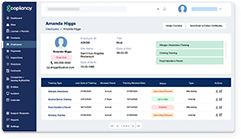
Every employee credential (alcohol server permits, food handler permits, professional licenses, certifications, background checks, training completions) with effective dates and expiration dates. Integration with HR systems keeps employee rosters current.
Inspection History and Corrective Action
All inspections per location with findings, citations, severity, and corrective action plan completion. Aggregate citation trends across locations identify systemic issues. Corrective action documentation supports follow-up inspection verification.
Equipment, Maintenance, and Safety Documentation
Fire safety equipment inspection records, AED maintenance, kitchen equipment maintenance, refrigeration logs, HVAC service records, and any specialty equipment per industry. Calibration certificates, safety inspections, and maintenance histories.
Incident and Complaint Logs
Customer incidents, employee incidents, neighbor complaints, and regulatory complaints logged with disposition tracking. Insurance claims and workers’ compensation incidents documented. Patterns identifiable across operations.
Inspection Readiness in Practice
Inspection readiness operates as a continuous state rather than a pre-inspection scramble:
- License visibility per location. Each license’s current status, expiration date, and condition compliance visible at any moment. No reliance on physical certificate posting (though physical posting still required by state law).
- Employee credential currency. Aggregate credential compliance across the workforce visible. Locations with credential gaps surface for management attention before inspection arrives.
- Inspection result trending. Past inspection results captured with finding categories. Common citation patterns inform training and operational adjustments before next inspection cycle.
- Corrective action plan tracking. Any outstanding corrective action plans visible with deadlines. Failed deadlines flagged.
- Document accessibility. Documents accessible during inspection from the location, from headquarters, or from cloud document management (SharePoint, Dropbox). Field inspectors can be directed to specific documents quickly.
- Inspector communication tracking. All inspector communications, requests, and follow-up tracked. Multi-inspection cycles maintain continuity even with inspector personnel changes.
- Pre-inspection self-audit. Structured self-audit checklists per regulatory framework supported. Operators identify and remediate issues before they become citations.
- Multi-location aggregate visibility. Operations leaders see compliance status across the portfolio. Underperforming locations identified for support before inspections compound problems.
How Copliancy Supports Audit Preparation
Every license, permit, and certification per location with issue, expiration, conditions, and renewal status. Original documentation attached. Renewal history with payment confirmation. Inspection-ready at any moment.
Every employee credential tracked with effective and expiration dates. Integration with HR systems (Workday, ADP, BambooHR, Paychex) keeps rosters current as people are hired, transferred, and depart.
All inspections per location tracked with findings, citations, severity, and CAP completion. Aggregate citation patterns identify systemic operational issues across the portfolio.
Citations and corrective action plans tracked with deadlines, owners, and remediation documentation. Plans complete on time and follow-up surveys verify remediation.
Fire safety, AED, kitchen, refrigeration, HVAC, and specialty equipment maintenance histories. Calibration certificates and safety inspections retained with renewal cycles.
Customer incidents, employee incidents, neighbor complaints, regulatory complaints, and insurance claims tracked with disposition. Patterns visible across operations.
Document management integrations centralize evidence in inspection-ready format. Documents accessible from location, headquarters, or cloud during inspections.
Aggregate reporting customizable to audience — state regulator format, franchisor audit format, lender compliance report, internal audit summary, M&A due diligence pack. Same underlying data, presented appropriately.
Every change to records logged with user, timestamp, and prior values. Audit-trail documentation supports regulatory investigations and internal audit review.
Frequently Asked Questions
Does Copliancy generate audit reports automatically?+
Aggregate reports configurable to audience requirements. State regulator format, franchisor audit format, lender compliance report, internal audit summary all supported. Custom report formats configurable to specific requirements.
How does Copliancy support unannounced inspections?+
Documentation is maintained continuously current rather than prepared before inspection. When inspectors arrive, current license status, employee credentials, inspection history, and corrective action status all immediately accessible from the location or via document management integrations.
Can Copliancy support franchisor audits?+
Yes. Franchisor brand standards documentation supported alongside regulatory compliance. Brand-required certifications, employee training, equipment standards, and operational practices all tracked. Franchisor read-only access configurable.
What about lender or PE compliance reporting?+
Quarterly or annual lender and PE compliance reports configurable from underlying compliance data. Aggregate portfolio status, license currency, active citation status, and CAP completion all reportable.
Does Copliancy maintain an audit trail?+
Yes. Every change to records logged with user, timestamp, and prior values. Audit-trail documentation supports regulatory investigations, internal audit review, and litigation hold requirements.
Is Copliancy used by operators for audit preparation today?+
Multi-location operators across hospitality, retail, healthcare, and adjacent segments use Copliancy to maintain continuous audit-ready documentation. The same underlying records support state inspections, franchisor audits, lender reporting, and internal audit review through audience-appropriate reporting.