











FOG, Grease Trap & Wastewater Discharge Permit Compliance for Restaurant Groups
Multi-location restaurant operators face a layer of environmental compliance often overlooked in initial planning — FOG (fats, oils, and grease) ordinances, grease trap and interceptor permits, EPA pretreatment program compliance for higher-volume operations, and per-jurisdiction wastewater discharge requirements. Per-municipality FOG ordinances drive much of the day-to-day compliance, with major water authorities like Los Angeles County Sanitation Districts, DC Water, NYC Department of Environmental Protection, Chicago Metropolitan Water Reclamation District, and similar bodies operating distinct programs. Pumping schedules, FOG manifests, inspection frequencies, and corrective action requirements vary substantially. Violation fines commonly reach $500-$10,000+ per occurrence with criminal exposure for serious violations. This guide explains how multi-location operators handle FOG compliance and how Copliancy supports the workflow.
FOG (fats, oils, and grease) compliance is regulated primarily at the local municipal or regional water authority level, with the federal EPA pretreatment program providing baseline framework for industrial users contributing to publicly-owned treatment works (POTWs). Restaurants are classified as “food service establishments” (FSEs) under most FOG programs — required to install grease traps or interceptors, maintain pumping schedules, retain pumping manifests, and submit to periodic inspections by the local water authority. Major water authorities operating distinct FOG programs include Los Angeles County Sanitation Districts (with its FOG control program), DC Water (Department of Water), New York City Department of Environmental Protection (NYCDEP), Chicago Metropolitan Water Reclamation District (MWRD), Boston Water and Sewer Commission, San Francisco Public Utilities Commission, Houston Public Works, and similar bodies. Per-jurisdiction FOG ordinances govern grease trap and interceptor sizing requirements, pumping frequencies (commonly 90-day default but ranging from 30 days to one year based on volume and capacity), inspection cadence, manifest retention requirements (typically 3 years), and violation enforcement. Sizing requirements scale with restaurant fixture units and waste flow — small restaurants commonly use indoor grease traps (under-counter or basement-mounted), while higher-volume operations require larger outdoor grease interceptors with capacities reaching thousands of gallons. EPA pretreatment program applies where restaurants contribute industrial wastewater to POTWs and exceed defined thresholds; significant industrial users (SIUs) face additional Industrial Wastewater Discharge Permit requirements with monitoring and reporting. Violation fines commonly reach $500-$10,000+ per occurrence with criminal exposure for ongoing serious violations. Major restaurant brands like Texas Roadhouse, Olive Garden, IHOP, Denny’s, Cheesecake Factory, and similar high-volume operators handle FOG compliance across hundreds of locations across dozens of jurisdictions. Copliancy supports multi-location restaurant operators with per-location grease trap/interceptor documentation, pumping schedule tracking, manifest retention, inspection history, EPA pretreatment compliance where applicable, and aggregate reporting.
FOG Compliance: The Restaurant Environmental Layer
FOG compliance operates at the intersection of federal, state, and local environmental regulation:
- Federal baseline. EPA pretreatment program (40 CFR Part 403) provides baseline framework for industrial users contributing to publicly-owned treatment works (POTWs). Restaurants commonly classified as food service establishments rather than industrial users, but high-volume operations may face significant industrial user (SIU) classification.
- State-level enabling. State environmental agencies typically delegate FOG program administration to local water authorities or municipalities. State environmental authorities provide framework while local entities run programs.
- Local administration. FOG ordinances and enforcement happen primarily at the municipal or regional water authority level. Per-jurisdiction variation is substantial.
- Food service establishment classification. Restaurants typically classified as Food Service Establishments (FSE) or similar terminology. Classification triggers FOG compliance requirements.
- Grease trap or interceptor required. Most jurisdictions require grease trap (smaller, indoor) or grease interceptor (larger, outdoor) installation. Sizing based on fixture units and waste flow.
- Pumping schedule mandates. Pumping frequencies set by ordinance. Common default 90 days, ranging from 30 days to one year based on volume and capacity. Some jurisdictions use the “25% rule” (pump when grease layer reaches 25% of interceptor capacity).
- Manifest retention. Pumping manifests typically retained for 3 years. Manifests document quantity pumped, hauler license, disposal location, and date.
- Inspection cadence. Routine inspections by local water authority commonly annual or biennial. Complaint-driven inspections more frequent.
- Enforcement consequences. Violations subject to fines (commonly $500-$10,000+ per occurrence), operational restrictions, and in severe ongoing cases criminal exposure.
FOG Permit Categories and Equipment
Smaller-capacity (typically 20-100 gallons) indoor grease trap installed under sinks or in kitchen utility areas. Common in smaller restaurants and quick-service operations. More frequent pumping schedules required.
Larger-capacity (typically 750-4,000+ gallons) outdoor grease interceptor. Required for higher-volume restaurants, full-service operations, and many quick-service brands. Underground installation common.
Newer hydromechanical units installed indoors providing higher capacity than traditional traps in smaller footprint. Acceptable substitute for outdoor interceptors in some jurisdictions.
Initial installation requires permit from local water authority or building department. Sized to fixture units, waste flow estimates, and per-jurisdiction requirements. Site inspection at installation common.
Operating permit for FSE discharge. Renewal cycles vary. May require fee payment, updated facility information, and operational details. Some jurisdictions roll FOG compliance into business license rather than separate permit.
For higher-volume operations exceeding significant industrial user thresholds, EPA pretreatment program applies through local POTW. Industrial Wastewater Discharge Permit (IWDP) required with monitoring, sampling, and reporting.
Restaurants don’t hold this directly — the grease hauler must be licensed in the jurisdiction. Restaurants verify hauler licensing before retaining service to ensure manifests are recognized.
Used cooking oil (yellow grease) typically collected separately from grease trap waste (brown grease). Yellow grease often a revenue stream rather than disposal cost. Per-jurisdiction permits and reporting may apply.
Some jurisdictions require written BMP plans documenting employee training, equipment maintenance schedules, cleaning protocols, and FOG-reduction practices.
Major Water Authority Variation
Per-jurisdiction FOG program variation is substantial for multi-location operators:
LA County Sanitation Districts
LA County’s FOG control program covers a substantial portion of Southern California. Sizing standards, pumping requirements, inspection cadence, and enforcement framework apply across covered jurisdictions. Coordinating with city of Los Angeles Bureau of Sanitation where applicable.
NYC Department of Environmental Protection
NYCDEP regulates FOG discharge in New York City through ordinance and permit program. Grease interceptor requirements, pumping schedules, manifest retention, and inspection program operate at significant scale across the city’s restaurant base.
DC Water
DC Water regulates FOG discharge in the District of Columbia. FOG program, pumping requirements, and enforcement framework distinct from surrounding Maryland and Virginia jurisdictions.
Chicago Metropolitan Water Reclamation District
MWRD serves Cook County. FOG program, industrial user thresholds, and pretreatment requirements apply across substantial Chicago metropolitan restaurant base.
Major City Water Authorities
Boston Water and Sewer Commission, San Francisco Public Utilities Commission, Houston Public Works, Philadelphia Water Department, Seattle Public Utilities, Atlanta Department of Watershed Management — each operates distinct FOG programs with per-jurisdiction sizing, pumping, and inspection requirements.
Suburban and Rural Jurisdictions
Outside major metro areas, FOG programs are commonly run at the municipal level through public works or building departments. Smaller jurisdictions may have simpler programs but multi-location operators across suburban and rural locations still face per-municipality variation.
Common FOG Compliance Issues
Restaurants missing pumping schedules face violation citations and risk grease blockages causing operational shutdowns. Per-location pumping schedules require active management.
Pumping manifests must be retained (typically 3 years) and available for inspector review. Lost or disorganized manifests are common violations even when pumping was performed on schedule.
Restaurants expanding fixture units or increasing volume sometimes exceed grease trap capacity. Undersized equipment triggers violations and requires upgrade.
Using unlicensed grease haulers (which may charge lower rates) creates violations even when pumping is otherwise compliant. Hauler licensing in jurisdiction must be verified.
Restaurants growing into significant industrial user (SIU) thresholds under EPA pretreatment program suddenly face Industrial Wastewater Discharge Permit requirements. Without monitoring, threshold crossings happen invisibly.
Where BMP plans are required, gaps in documented employee training, equipment maintenance, and cleaning protocols create violations even where actual practices are compliant.
How Copliancy Handles FOG Compliance
Each location has complete records of grease trap or interceptor, capacity, installation date, installation permit, and operational permits. Equipment specifications documented against per-jurisdiction sizing requirements.
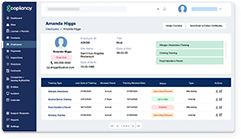
Per-location pumping schedules tracked against per-jurisdiction requirements. Pumping cadence (30, 60, 90, 180 days, or per-capacity rules) managed per location. Pre-pumping reminders and missed pumping alerts surface for operations team.
Pumping manifests captured per event with hauler, quantity, disposal location, and date. 3-year retention maintained per jurisdiction requirement. Inspector access supported through location records.
Per-jurisdiction FOG requirements documented — LA County, NYC DEP, DC Water, Chicago MWRD, and any other water authority covering operations. Sizing standards, pumping frequencies, inspection cadence, and BMP requirements applied per location.
Approved hauler list per jurisdiction maintained. Hauler licensing status verified before service. Unlicensed haulers flagged so operations doesn’t inadvertently retain non-compliant service.
For locations crossing significant industrial user thresholds, Industrial Wastewater Discharge Permit tracked alongside FOG program compliance. Monitoring, sampling, and reporting requirements managed per permit conditions.
FOG-related inspections per location tracked with findings, citations, and CAP completion. Aggregate citation patterns identify systemic operational issues. Multi-jurisdiction comparison highlights jurisdictions with stricter enforcement.
Where BMP plans required, employee training records, equipment maintenance schedules, cleaning protocols, and FOG-reduction practices documented. Inspection-ready BMP documentation maintained per location.
Portfolio reporting across FOG compliance — pumping schedule compliance, manifest retention, inspection status, citation patterns, equipment sizing adequacy. Ready for ownership and operations review.
Frequently Asked Questions
Does Copliancy schedule grease trap pumping with haulers?+
No. Pumping is scheduled with the licensed hauler by operations team. Copliancy tracks the schedule, generates reminders before pumping due dates, captures manifests after pumping, and maintains 3-year retention for inspector review.
How does Copliancy handle per-jurisdiction variation?+
Per-jurisdiction FOG requirements (sizing, pumping frequency, inspection cadence, BMP requirements) documented for each water authority covering operations. Per-location requirements applied based on jurisdiction. Multi-jurisdiction operators see correct requirements per location.
Can Copliancy support EPA pretreatment compliance for high-volume locations?+
Yes. Locations crossing significant industrial user thresholds tracked with Industrial Wastewater Discharge Permit and ongoing monitoring, sampling, and reporting requirements. Pretreatment compliance integrated with broader FOG program tracking.
What about hauler licensing verification?+
Approved hauler list per jurisdiction maintained. Hauler licensing status verified before service contracts established. Where new haulers proposed, licensing verification routed to compliance team before contract execution.
Does Copliancy track BMP plan documentation?+
Yes. Where BMP plans are required by jurisdiction, employee training records, equipment maintenance schedules, cleaning protocols, and FOG-reduction practices documented per location. Inspection-ready BMP documentation maintained.
Is Copliancy used by restaurant operators for FOG compliance today?+
Multi-location restaurant operators including casual dining brands, quick-service operators, and full-service restaurant groups use Copliancy to manage FOG compliance alongside broader licensing and permit operations. Equipment, pumping schedules, manifests, and inspection history all tracked through the same system supporting overall compliance.