











Multi-State Pharmacy License Management: State Boards, DEA & Controlled Substance Compliance
Multi-location pharmacy operators — chain pharmacies (CVS, Walgreens, Walmart, Rite Aid, Kroger Health), regional grocery and drugstore chains, specialty pharmacies, mail-order pharmacies, long-term care pharmacies, compounding pharmacies, and pharmacy benefit operators — face one of the most heavily regulated multi-state compliance environments in retail. Per-state board of pharmacy licensure per facility, federal DEA Form 224 registration for controlled substances, state-level controlled substance registration (CSR/CDS) layered on federal DEA, Pharmacist-in-Charge (PIC) requirements per location, foreign qualification with secretary of state where operating outside home state, pharmacy technician registrations, and continuing pharmacist licensure all multiply across portfolios. This guide explains how multi-location pharmacy operators handle compliance and how Copliancy supports the workflow.
Multi-state pharmacy compliance involves at least four regulatory layers operating simultaneously. At the federal layer, the Drug Enforcement Administration (DEA) requires DEA Form 224 registrations per location for retail pharmacies, hospitals, clinics, and similar entities dispensing controlled substances. DEA registrations are assigned to one of twelve groups corresponding to months of the year; group expiration is the last day of the assigned month, and the initial registration period runs not less than 28 nor more than 39 months. Corporations with 50 or more retail pharmacy registrations may enroll in the DEA chain renewal program using Retail Pharmacy Registration Affidavits for Chain Renewal rather than per-pharmacy applications. At the state board layer, every pharmacy facility requires state board of pharmacy licensure issued per-location. Pharmacy chains with 1,000+ locations carry 1,000+ state pharmacy permits. State controlled substance registrations (CSR / CDS depending on terminology used by the state) are required in many states in addition to federal DEA registration, and in some states must be obtained before applying for the federal DEA certificate. Per-location operational requirements include Pharmacist-in-Charge (PIC) designations — PICs must hold current pharmacist licenses in the state, may serve as PIC for only one pharmacy at a time, are responsible for all pharmacy operations, and must be personally on premises when the pharmacy is open in some states. PIC changes trigger reporting obligations and required controlled substance inventories within statutory deadlines (often 24 hours). Multi-state operators face foreign qualification with secretary of state in each state where operating outside the home state, NPI (National Provider Identifier) number requirements under HIPAA, and per-state pharmacy technician and pharmacist registrations. Even pharmacies without a physical state presence (mail order, internet) may face state licensing when dispensing controlled substances into the state. Copliancy supports multi-state pharmacy operators with per-location facility permit tracking, per-pharmacist credentialing, DEA registration coordination, controlled substance state registrations, PIC change workflows, and aggregate reporting.
Pharmacy Multi-State Compliance: Why It’s Different
Multi-state pharmacy operations sit at the intersection of healthcare regulation and retail licensing:
- Per-location facility permits. Every pharmacy facility (retail, hospital, clinic, long-term care, mail order, specialty) requires its own state pharmacy permit. Operating multiple pharmacy facilities means multiple applications and renewals.
- Federal DEA registration. Pharmacies dispensing controlled substances require federal DEA registration via DEA Form 224 (or DEA Form 224a for renewal). Multiple location operators handle multiple registrations.
- State CSR / CDS layered on federal DEA. Many states require state controlled substance registration in addition to federal DEA. Some states require state CSR before federal DEA can be obtained.
- PIC requirement per pharmacy. Each pharmacy requires a designated Pharmacist-in-Charge holding a current pharmacist license in the state. PICs may serve as PIC for only one pharmacy at a time.
- Foreign qualification. Pharmacy operators expanding to new states may need to foreign qualify their business entity with the secretary of state in each new state before licensing applications.
- Inspection at issuance. Most states require facility inspection after application submission before pharmacy permit issuance.
- Specialty operations layered. Long-term care pharmacy, mail order pharmacy, compounding pharmacy, nuclear pharmacy each carry additional specific requirements beyond standard retail pharmacy licensing.
- Mail order / internet across state lines. Pharmacies without physical state presence may face state licensing when dispensing controlled substances into the state — the geographic footprint of regulatory exposure extends beyond physical locations.
State Board of Pharmacy Licensing
The base state board of pharmacy permit issued per facility. Required before dispensing operations begin. Annual or biennial renewal cycles vary by state.
Where pharmacies store and dispense controlled substances, separate Controlled Substance Facility licenses (or equivalent) required in most states. Renewed alongside or independently from base pharmacy permit.
Pharmacy operations serving long-term care facilities (skilled nursing, assisted living) require specific licensure layered on standard pharmacy permits. Automated dispensing system authorizations where applicable.
Mail order and internet pharmacy operations face state-by-state licensing where dispensing into states. Even pharmacies without physical state presence may need state licensing.
Sterile and non-sterile compounding operations require specific state board approval. USP 795 (non-sterile) and USP 797 (sterile) compliance documented.
Nuclear pharmacy operations require Qualified Nuclear Pharmacist as PIC and specific state authorizations.
Pharmacy operators with wholesale operations require Wholesale Distributor licensing separate from retail pharmacy permits. Drug Supply Chain Security Act (DSCSA) compliance applies.
Most states require pharmacy technician registration with the state board. Per-state requirements vary. Technicians in some states require national certification (PTCB or ExCPT).
Pharmacy benefit manager operations require state PBM licensing in growing number of states (Kentucky, New Mexico, and others have recently enacted PBM licensing requirements).
DEA Registration and Controlled Substance Compliance
Federal DEA registration governs controlled substance handling:
DEA Form 224 Per Location
DEA Form 224 is the initial application for retail pharmacy, hospital/clinic, practitioner, teaching institution, and mid-level practitioner registration. Each location requires its own registration.
Schedule Designations
DEA registration specifies which controlled substance schedules (II, III, IV, V) the pharmacy is authorized to dispense. State licensing boards determine which schedules can be dispensed by category of registrant.
12-Group Expiration System
At first registration, business activity is assigned to one of twelve groups corresponding to months of the year. The expiration date of all registrants within a group is the last day of the assigned month. Initial registration period runs not less than 28 nor more than 39 months from registration date.
Chain Renewal Program
DEA requests corporations with 50 or more retail pharmacy registrations to enroll in the chain renewal program. Retail Pharmacy Registration Affidavit for Chain Renewal provided in lieu of separate application per pharmacy. A responsible individual answers questions on the affidavit on behalf of the corporation per registrant.
State CSR / CDS Registration
State controlled substance registrations vary by state and may be required before federal DEA can be obtained. The DEA relies on state licensing boards to determine practitioner suitability for controlled substance handling.
Change of Ownership / Location
Facility relocations or ownership changes after CSR issuance generally require new registrations. Continuity planning for acquisitions and relocations must account for re-registration timelines.
Pharmacist-in-Charge and Pharmacist Credentialing
The PIC (Pharmacist-in-Charge) role creates per-location credentialing complexity:
- PIC per pharmacy. Each pharmacy requires a designated Pharmacist-in-Charge. PICs must hold current pharmacist licenses in the state where the pharmacy is located.
- One-pharmacy-at-a-time rule. A PIC may serve as PIC for only one pharmacy at a time. Multi-location operators require one PIC per pharmacy.
- PIC change reporting. PIC changes require notification to the state board. Per-state timing varies; some require immediate notification, others within 10-30 days.
- Controlled substance inventory at PIC change. Many states require complete controlled substance inventory within 24 hours of PIC change, with copies submitted to the state CSR office.
- Annual self-inspection. States including Delaware require PICs to complete annual self-inspection reports (e.g., Community Pharmacy Pharmacist-in-Charge Self-Inspection Report) and retain on premises.
- State pharmacist licensure per state. Pharmacists working in multiple states require state-by-state licensure. Reciprocity is available in many states but not automatic.
- Continuing education. State-specific continuing education hours required for pharmacist license renewal. Some states require specific topic hours (controlled substance management, opioid education, immunization).
- Pharmacy technician credentials. Most states require technician registration with the state board. Some require national certification (PTCB or ExCPT). Continuing education for technicians required in many states.
How Copliancy Handles Multi-State Pharmacy Compliance
Each pharmacy facility has complete records of state board permit, Controlled Substance Facility license, DEA Form 224 registration, NPI, state CSR/CDS, and any specialty endorsements (LTC, compounding, nuclear, sterile preparation).
DEA registrations tracked with assigned month group and expiration. Chain renewal program enrollment status documented for corporations with 50+ pharmacy registrations. Form 224a renewal coordination at the corporate level.
State controlled substance registrations tracked per state per pharmacy. Renewal cycles vary by state and tracked appropriately. Pre-DEA sequencing where states require state CSR first.
PIC per pharmacy tracked with current license status, transition history, and state notification compliance. PIC changes trigger workflows including controlled substance inventory (24-hour deadline in many states), state board notification, and acknowledgement forms.
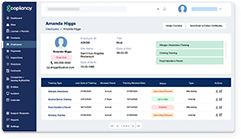
Per-pharmacist tracking with state licenses, continuing education hours per state requirement, controlled substance authority documentation, and specialty certifications.
Per-technician tracking with state registration, national certification (PTCB or ExCPT) where required, and continuing education hours per state requirement.
Long-term care, mail order, compounding (USP 795 / USP 797), nuclear, and other specialty operations tracked with category-specific compliance documentation.
Where applicable to corporate structure, state PBM licenses tracked alongside retail pharmacy permits. New state PBM licensing requirements (Kentucky, New Mexico, and others) monitored for compliance.
Portfolio reporting across pharmacy operations — per-state permit status, DEA registration status, PIC compliance, pharmacist credential rates, upcoming renewals. Ready for ownership, board, and lender review.
Frequently Asked Questions
Does Copliancy file state board or DEA applications?+
No. State board applications and DEA submissions are filed by the operator or counsel directly with each state and the DEA. Copliancy is the internal system of record — tracking applications in progress, capturing resulting registrations, scheduling renewals, and managing the lifecycle.
How does Copliancy handle DEA chain renewal?+
Corporations with 50+ pharmacy registrations enroll in DEA chain renewal. Copliancy tracks enrollment status and supports the Retail Pharmacy Registration Affidavit for Chain Renewal process at corporate level rather than per-pharmacy application.
Can Copliancy track PIC changes?+
Yes. PIC changes trigger workflows including controlled substance inventory (24-hour deadline in many states), state board notification, PIC acknowledgement forms, and self-inspection requirements. Per-state requirements applied appropriately.
What about state CSR registration sequencing?+
State controlled substance registrations tracked per state per pharmacy. In states requiring CSR before federal DEA, the sequencing is documented so registrations process in correct order. Pre-DEA state work doesn’t get skipped.
Does Copliancy support pharmacy technician credentialing?+
Yes. Per-technician tracking with state registration, national certification where required, and continuing education hours. Integration with HR systems keeps technician rosters current as people are hired and transferred.
Is Copliancy used by pharmacy operators today?+
Multi-location pharmacy operators including chain pharmacies, specialty pharmacies, and pharmacy benefit operators face compliance challenges similar to other heavily-regulated multi-state operations. Copliancy’s flexible architecture supports pharmacy operations including per-facility permits, federal/state controlled substance coordination, PIC management, and aggregate reporting.