











License Management for Multi-Location Childcare & Early Education Operators
Multi-location childcare and early education operators — from large national chains like KinderCare, Bright Horizons, Learning Care Group, La Petite Academy, Primrose Schools, and Childcare Network, to large independent regional operators — face one of the most heavily regulated multi-site operating environments in the country. State childcare licensing through agencies like DCFS, DCS, DHS, or state-specific divisions varies dramatically per state. Each facility must maintain state licensing, per-staff background checks and clearances, per-staff training certifications, child-to-staff ratios specific to age group, square footage and capacity standards, food service compliance, transportation compliance where applicable, and frequent state inspections. This guide explains how multi-location childcare operators handle compliance and how Copliancy supports the workflow.
Multi-location childcare and early education operators face compliance complexity that few other multi-site segments match. Each facility carries state childcare licensing through state agencies (DCFS, DCS, DHS, OEC, or state-specific names varying by state — Texas Health and Human Services, California Department of Social Services Community Care Licensing, Florida Department of Children and Families, Illinois DCFS, and many others). Per-state licensing standards vary significantly — child-to-staff ratios by age group, square footage per child, outdoor play space, kitchen and food service requirements, ventilation, sanitation, and emergency preparedness. Each staff member carries credentials: state-required background checks (criminal history, child abuse registry, sex offender registry, sometimes fingerprint-based federal checks), pre-service and ongoing training hours, specific certifications (CPR, first aid, medication administration in many states), and director-specific credentials at the facility level. Most states require annual or more frequent inspections; some operate unannounced inspection programs. Citations carry significant consequences including license restrictions and parent disclosure requirements. Multi-state operators face dramatically different regulatory frameworks across state lines — a Texas director qualification doesn’t transfer to California or Florida. Acquisitions of childcare facilities require state regulatory approval. Copliancy supports multi-location childcare operators with per-facility licensing tracking, per-staff credential management, inspection history documentation, ratio compliance, citation tracking, and aggregate reporting for ownership, board, and lender review.
Childcare Multi-Location Compliance: Why It’s Different
Multi-location childcare operations face compliance considerations that distinguish the segment:
- Heavy state regulation. Childcare is among the most heavily regulated retail multi-location segments in the country. Per-state licensing, frequent inspections, and significant citation consequences.
- Per-state agency variation. Different states use different agency names — California Department of Social Services Community Care Licensing, Texas Health and Human Services Child Care Regulation, Illinois DCFS, Florida DCF, Connecticut Office of Early Childhood (OEC), and many others.
- Heavy per-staff requirements. Background checks (multiple types), training hours, certifications, and director qualifications all tracked per staff member. Onboarding burden is substantial.
- Child-to-staff ratios. Per-state ratios by age group (infant, toddler, preschool, school-age). Ratio violations are among the most common citations.
- Frequent inspections. Many states inspect annually at minimum; some operate quarterly inspection programs or random unannounced inspections.
- Parent disclosure obligations. Citations and inspection findings disclosed to parents in many states. Compliance status affects parent enrollment decisions.
- Federal CCDF requirements. Facilities accepting Child Care Development Fund subsidies face additional federal regulatory requirements layered on state requirements.
- Acquisition complexity. Acquisitions of childcare facilities require state regulatory approval. Director changes, ownership changes, and operational changes all reportable.
Per-Facility Licensing Components
Required from each state’s licensing agency. Annual or multi-year renewal cycles vary by state. License conditions including approved capacity by age group.
State-specific director credentials required at each facility. Director vacancies require notification and timely replacement.
License specifies maximum enrollment by age group (infant, toddler, preschool, school-age). Capacity changes require license modification.
Per-state square footage requirements per child (indoor and outdoor). Capacity tied to physical space measurements.
Required from local building department. Use category must reflect childcare. Modifications affecting capacity or layout trigger CO updates.
Annual fire safety inspection by local fire marshal. Special requirements for childcare facilities including evacuation drills documentation.
Where facilities prepare or serve food, health department food permits required. Some childcare programs participate in federal Child and Adult Care Food Program (CACFP) with additional documentation.
Facilities transporting children (field trips, transportation to/from school) need transportation compliance including vehicle inspections and driver credentials.
Facilities accepting state subsidies (CCAP, CCDF) carry additional compliance and reporting requirements. Quality rating systems (QRIS) in many states.
Per-Staff Credentialing
Childcare staff credentialing is per-person and heavy:
- Multiple background check types. Criminal history background check, state child abuse and neglect registry check, sex offender registry check, and in many states fingerprint-based FBI check. Some states require renewal of background checks every few years.
- Pre-service training hours. Many states require minimum training hours before staff can work with children. Documentation maintained per staff member.
- Annual ongoing training hours. Most states require annual ongoing professional development hours. Tracked per staff member.
- CPR and first aid certification. Required for staff in most states. Renewal cycles typically 1-2 years.
- Medication administration certification. Where staff administer medications, additional certification required in many states.
- Director-specific credentials. Director roles require state-specific qualifications. Some states require CDA (Child Development Associate) credentials or higher.
- Specialty certifications. Special education aides, food service staff, transportation drivers all carry additional certifications.
- Health screenings. Some states require staff health screenings or TB tests at hire and periodically.
Inspections, Citations, and Parent Disclosure
Annual or more frequent state inspections. Inspector visits child-to-staff ratios, physical space, food service, training documentation, background check records, and emergency preparedness.
Inspections triggered by parent complaints or external reports. Often unannounced. Documentation must be inspection-ready at all times.
Among the most common citation categories. Per-age-group ratios must be maintained at all times during care, including during breaks and transitions.
States categorize citations by severity. Minor citations may be remediated; serious citations affect license status and parent disclosure.
Many states require disclosure of inspection results and citations to parents. Some operate public databases of inspection results.
Citations trigger corrective action plans with deadlines. Failure to remediate timely escalates consequences including license restrictions or revocation.
How Copliancy Handles Multi-Location Childcare Compliance
Each facility has complete records of state childcare license, approved capacity by age group, square footage, certificate of occupancy, fire safety, and food service permits.
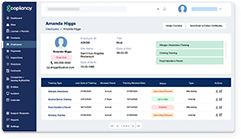
Every staff member tracked with background checks (all required types), pre-service training, ongoing training hours, CPR/first aid, medication administration, and specialty certifications.
Director roles tracked per facility with qualification documentation. Vacancies flagged for prompt replacement to avoid state notification issues.
Per-state credentialing requirements documented. Multi-state operators see credential requirements per state. Staff transferring between states have their credentials tracked per state.
Inspections tracked per facility with findings, citations, severity, and remediation. Aggregate trends identify systemic operational issues.
Citations and corrective action plans tracked with deadlines. Remediation documentation centralized. Compliance officers ensure plans complete on time.
For facilities participating in federal food programs or accepting state subsidies, additional documentation and reporting requirements tracked alongside core compliance.
When acquiring childcare facilities, integration workflows inventory state licensing, staff credentials, inspection history, and capacity. State regulatory approval timelines tracked.
Portfolio reporting across childcare operations — license status by state, staff credential compliance, inspection trends, citation history. Ready for ownership, board, and lender review.
Frequently Asked Questions
Does Copliancy file state childcare license applications?+
No. State applications and renewals are filed by the operator or licensing counsel directly with each state agency. Copliancy is the internal system of record — tracking applications in progress, capturing resulting licenses, scheduling renewals, and managing the lifecycle.
How does Copliancy handle multi-state operator credentialing?+
Each staff member tracked with credentials per state where they work. Multi-state operators see per-state requirements (different background check types, training hour requirements, director qualifications) applied appropriately. Integration with HR systems keeps staff rosters current.
Can Copliancy track inspection history and citations?+
Yes. Inspections per facility tracked with findings, citations, and severity. Corrective action plans tracked with deadlines and remediation documentation. Aggregate citation patterns identify systemic operational issues.
What about background check renewal cycles?+
Where states require periodic background check renewal, the cycles tracked per staff member. Alerts surface before renewals come due so staff don’t become non-compliant.
Does Copliancy support CACFP food program participation?+
Federal Child and Adult Care Food Program participation requires additional documentation. CACFP-specific records tracked alongside core compliance. State subsidy program participation (CCAP, CCDF, QRIS) similarly supported.
Is Copliancy used by childcare operators today?+
Multi-location childcare operators face compliance challenges similar to other heavily-regulated multi-state operations. Copliancy’s flexible architecture supports childcare operations including per-facility licensing, per-staff credentialing, inspection management, and aggregate reporting.