











Dental Service Organization License & Credential Management
Dental Service Organizations (DSOs) operate one of the fastest-growing multi-location segments in healthcare, with private-equity-backed platforms expanding from 20 to 200+ practices through acquisition and de novo openings. With scale comes a compliance environment that few startup DSOs are prepared for: per-state dental board oversight, facility licensing where required, provider credentialing across multiple states, DEA registrations per practice and per prescriber, radiation safety permits for X-ray equipment, infection control inspections, OSHA bloodborne pathogen compliance, HIPAA documentation, payer credentialing, and insurance and Medicare/Medicaid enrollment. A single DSO practice may carry 15-25 active credentials, licenses, and registrations. Multiply across 50, 100, or 500 practices and the workflow becomes unmanageable without dedicated software. This guide explains how DSO operators handle compliance and how Copliancy supports the workflow.
Dental Service Organizations face a compliance environment that combines healthcare credentialing complexity with multi-location operational scale. A typical DSO practice carries: state dental practice license or facility registration (where required by state), individual dentist and hygienist licenses (per state per provider), DEA registration per practice and per prescribing provider, radiation safety permits for X-ray equipment (state-issued and often per-machine), CLIA registration for laboratory services where applicable, OSHA bloodborne pathogen compliance, HIPAA-required documentation, infection control compliance, controlled substance recordkeeping, Medicare and Medicaid enrollment per practice and per provider, commercial payer credentialing per provider, and malpractice insurance per provider. Add provider sanctions monitoring (NPDB, OIG exclusion list checks) and continuing education tracking, and per-practice compliance volume becomes substantial. For DSOs expanding through acquisition, the integration burden is enormous — each acquired practice arrives with its own provider rosters, existing credentials in various states of currency, and inconsistent documentation. Centralized tracking is the only way to manage compliance at DSO scale. Copliancy supports DSO operations with per-practice license tracking, per-provider credentialing, multi-state credential management, payment tracking with AP integration, and aggregate visibility for executive and board review.
Why DSO Compliance Is Different
DSOs combine the credentialing complexity of healthcare with the multi-location operational scale of retail. The result is a compliance environment that resembles neither pure healthcare nor pure retail:
- Dual-layer compliance. Facility-level compliance (the practice as a business) layers with provider-level compliance (each clinician’s individual credentials). Both layers must stay current independently.
- Multi-state expansion. DSOs growing through acquisition expand across state lines. Each state has its own dental board, license requirements, and provider portability rules. Some states have specific DSO statutes.
- Provider mobility. Dentists and hygienists move between practices within the DSO. License portability, credentialing at new locations, and active practice-of-record tracking become operational issues.
- Acquisition integration. Acquired practices arrive with existing provider rosters in various states of credential currency. Integration requires bringing every provider and every practice up to consistent standards.
- Payer credentialing as revenue dependency. Out-of-network providers can’t bill payers. Credentialing delays directly impact revenue. Payer credentialing must be tracked as a revenue process, not just a compliance process.
- Sanctions monitoring as a continuous workflow. Provider sanctions, OIG exclusions, and NPDB updates can occur any time. Continuous monitoring — not just annual checks — is increasingly expected.
Facility-Level Licenses and Registrations
Where required by state. Some states license dental practices as entities; others operate solely through provider licensing. Annual renewal where applicable.
City or county business license. State sales tax registration where applicable (some states tax dental services or supplies). Annual renewal.
Drug Enforcement Administration registration for the practice location. Required for controlled substance handling (anesthetics, pain medications). Three-year renewal cycle.
State-level controlled substance registration in addition to federal DEA. Required in most states. Renewal cycles vary by state.
Radiation safety permits per X-ray unit. Initial registration plus periodic inspection. Equipment additions and replacements trigger permit work.
Clinical Laboratory Improvement Amendments registration for in-office lab services. Required for any laboratory testing including some chairside diagnostics.
Notice of Privacy Practices, Business Associate Agreements with vendors, breach notification procedures, security risk assessments. Documentation maintained per practice.
Bloodborne pathogen exposure control plan, hazard communication, employee training records, MSDS/SDS sheets per practice.
Per-practice Medicare and state Medicaid enrollment where serving those populations. Revalidation cycles every 3-5 years. CMS-855 form management.
Provider-Level Credentialing
Beyond facility licensing, every clinical provider in the DSO carries their own portfolio of credentials. Per-provider tracking includes:
- State dental license. Per state where the provider practices. Renewal cycles vary by state (typically 1-3 years). Continuing education requirements per renewal.
- State hygienist license. Per hygienist per state. Similar cycle to dentist licenses.
- Individual DEA registration. Per-prescriber DEA registration in addition to per-practice DEA. Three-year cycle.
- State controlled substance prescriber registration. Per-prescriber state registration in addition to federal DEA.
- Malpractice insurance. Per-provider professional liability insurance. Coverage amounts, expiration dates, and continuing coverage tracked.
- BLS / ACLS / PALS certifications. Life support certifications required by some states or specialty boards. Two-year renewal cycles.
- Anesthesia permits. Conscious sedation and general anesthesia permits per provider where applicable. Site permits often required as well.
- NPI numbers. National Provider Identifier per provider. Type 1 (individual) and Type 2 (organizational) numbers tracked.
- CAQH credentialing. Council for Affordable Quality Healthcare profile maintenance for payer credentialing. Re-attestation every 120 days.
- Payer credentialing. Each commercial payer (Delta Dental, Aetna, Cigna, MetLife, Guardian, etc.) credentials providers separately. Re-credentialing every 2-3 years.
- NPDB queries. National Practitioner Data Bank queries at credentialing and re-credentialing.
- OIG/SAM exclusion checks. Office of Inspector General and System for Award Management exclusion list checks. Best practice is monthly checks.
- Continuing education. CE hours per state requirements. Specialty-specific CE in addition to general CE.
Specialized Permits and Considerations
Conscious sedation and general anesthesia permits per provider and per site. State dental board oversight. Equipment and training requirements.
DSOs operating mobile dental units (school-based services, nursing home services) face mobile equipment registration and per-jurisdiction operating permits.
Some states require notification to patients when providers are out-of-network for their insurance. Documentation of notifications required.
Teledentistry expansion has created state-by-state regulatory variation. Where telehealth is offered, applicable authorizations tracked per provider per state.
Orthodontists, oral surgeons, periodontists, endodontists, pediatric dentists carry specialty board certifications in addition to general dental licensure.
Some states have specific DSO statutes governing the corporate practice of dentistry, management service agreements, and ownership structures. Compliance with state-specific DSO frameworks tracked.
Common DSO Compliance Issues
- Acquisition due diligence gaps. Acquired practices arrive with incomplete credential records. Without standardized integration workflows, gaps persist and surface later in payer audits or sanctions reviews.
- Provider mobility breakdowns. Dentists transfer between practices within the DSO but credential records don’t follow. Provider shows up at new practice without facility credentialing complete.
- Payer credentialing delays. Onboarding new providers takes 90-180+ days for payer credentialing. Without proactive tracking, providers practice out-of-network and revenue is lost.
- State license lapses. Providers practicing in multiple states miss renewals in secondary states. Practicing on lapsed license is a serious offense.
- DEA renewal misses. Three-year DEA cycles are easy to miss. Lapsed DEA means no controlled substance prescribing or handling.
- Sanctions surprises. Provider sanctions or OIG exclusions discovered after the fact create payer billing issues, contractual breaches with payers, and potential False Claims Act exposure.
- CE shortfalls. Providers fall short of CE requirements at renewal time. Renewal is delayed; practice impact is real.
How Copliancy Handles DSO Compliance
Each practice has a complete record of facility licenses, DEA registrations, X-ray permits, CLIA registrations, OSHA documentation, and HIPAA materials.
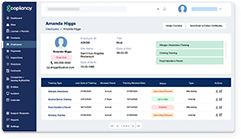
Every dentist, hygienist, and clinical provider with complete credential record — state licenses (per state), DEA, malpractice, BLS, CE hours, NPI, CAQH status, payer credentials.
Providers with licenses in multiple states tracked across all states. Renewal cycles per state. CE requirements per state. Inactive states managed separately from active states.
When acquiring practices, integration workflows inventory existing licenses and credentials, identify gaps, and route remediation. New acquisitions reach standardized baseline quickly.
Per-provider per-payer credentialing status, application dates, effective dates, and re-credentialing cycles. Revenue impact of credentialing delays visible.
OIG/SAM exclusion checks tracked per provider with monthly verification status. Sanctions surprises avoided through continuous monitoring.
License certificates, CE certificates, malpractice declarations, sanctions check results, NPDB queries, payer welcome letters — all attached to records. SharePoint and Dropbox integrations supported.
Hundreds of providers and dozens of practices generate hundreds of renewals per year. Alerts surface upcoming work to credentialing teams and compliance leadership.
Portfolio reporting on facility compliance, provider credentialing rates, payer enrollment status, sanctions monitoring, and CE compliance. Ready for executive, board, and lender review.
Frequently Asked Questions
Does Copliancy replace our credentialing software (Modio, Symplr, etc.)?+
Many DSOs use credentialing-specific software for the operational workflow of payer credentialing (CAQH integration, application submission, re-credentialing automation). Copliancy can complement those systems by serving as the broader compliance system of record — tracking facility licenses, DEA registrations, X-ray permits, OSHA compliance, and aggregating provider credential data alongside non-credentialing compliance. Some DSOs replace credentialing software with Copliancy; others integrate.
How does Copliancy handle multi-state license tracking for providers?+
Each provider is configured with their active states. License records per state with renewal dates, CE requirements, and state-specific conditions. Providers expanding into new states get tracked from application through active license. Inactive states preserved for historical record.
Can Copliancy track DSO acquisition integration?+
Yes. Site due diligence workflows support DSO acquisitions — checklists for facility license inventory, provider credential audit, payer enrollment review, and integration tracking. New acquisitions move from due diligence to operational compliance through standardized workflows.
What about HIPAA and OSHA compliance documentation?+
HIPAA documentation (Notice of Privacy Practices, BAAs, security risk assessments, breach procedures) and OSHA documentation (exposure control plans, training records, SDS sheets) tracked per practice with review and update cycles.
Does Copliancy handle DEA registration tracking?+
Yes. Per-practice DEA registrations and per-prescriber DEA registrations both tracked with three-year renewal cycles. State controlled substance registrations tracked alongside federal DEA. Alerts begin 90 days before expiration.
Can payers or external auditors get access to credentialing records?+
Yes. External parties (payers, accreditation bodies, auditors) can be granted role-restricted access to specific records or specific reports. Most DSOs give payers read-only access to relevant credentialing records during audits while keeping unrelated data restricted.