











License Management for Cinema & Entertainment Venues
Modern cinema and entertainment venues operate at the intersection of multiple licensing regimes: food service licensing, liquor licensing, public assembly licensing, public amusement licensing, fire and life safety certifications, and projection/exhibition permits. Operators like Alamo Drafthouse Cinema, Drive Shack, Round One Bowling & Arcade, Topgolf, Go Ape, and similar concepts — where food, alcohol, and entertainment are combined — face the most complex licensing stack in the multi-location operations world. A single venue may carry 12-18 active licenses and certifications. This guide explains how multi-location cinema and entertainment venue operators handle the workflow and how Copliancy supports it.
Cinema and entertainment venues face the most complex licensing stack in multi-location operations. A modern cinema with dine-in service carries food service licensing, liquor licensing (often a special endorsement for theater-style service), place of assembly certification (sized by seating capacity), public amusement licensing (for performances and exhibitions), MPAA exhibition agreements, projector/booth permits, fire safety inspection certifications, exit signage and emergency lighting compliance, and ADA compliance certifications. Family entertainment centers and entertainment-dining hybrids (Topgolf, Drive Shack, Round One, Alamo Drafthouse, Go Ape, Punch Bowl Social) add additional layers — bowling lane safety, golf bay safety, climbing/ropes course inspection, arcade game amusement device permits, and on-site retail/merchandise licensing. Per-location complexity multiplied across 10, 25, or 100+ venues becomes unmanageable without dedicated software. Effective entertainment venue compliance requires centralized tracking per location and per license, integration with fire and life safety inspection cycles, document management for certifications and inspection reports, and aggregate visibility for ownership and operations leadership. Copliancy is used by multi-location entertainment operators including Topgolf, Alamo Drafthouse Cinema, Drive Shack, Round One Bowling & Arcade, Go Ape, Wedgewood Weddings, and others.
Why Entertainment Venues Are Different
Entertainment venues differ from standard restaurants or retail operations in several structural ways that drive licensing complexity:
- Combined activities. A modern venue combines food service, alcohol service, public entertainment, retail merchandise, and sometimes amusement gambling under one roof. Each activity has its own licensing regime.
- Capacity-driven licensing. Many entertainment venue permits scale with seating capacity, occupancy, or square footage. Adding seats, expanding spaces, or modifying floor plans triggers re-permitting.
- Public assembly classification. Once capacity exceeds threshold (typically 75-100 occupants), venues are classified as places of public assembly with elevated fire and life safety requirements.
- Equipment-specific permits. Projection booths, amusement devices, bowling lanes, climbing structures, golf bays, kitchens with hood suppression — each piece of equipment may carry its own permit or inspection requirement.
- Operating hours scrutiny. Venues operating into late evening hours face additional scrutiny on hours, security, noise, and parking from local jurisdictions.
- Special events overlay. Private events, corporate buyouts, and special programming often require additional permits or notifications.
License Categories Multi-Location Venues Track
Health department food service permit. Required wherever food is prepared and served. Inspection cycles vary by jurisdiction.
Standard restaurant or bar liquor license, sometimes with theater service endorsements, special hours conditions, or capacity-tied terms. Many states have cinema-specific liquor classes.
Required for venues with capacity exceeding threshold (varies by jurisdiction). Building/fire department certification with annual or periodic renewal.
Required for venues offering entertainment — films, live performance, DJs, amplified music, dancing. Conditions on hours and content may apply.
Required for arcade games, redemption games, skill games, golf bay equipment, bowling lane equipment. Per-device permits in some jurisdictions.
Projection booth permits and theater operation permits required in many jurisdictions. MPAA exhibition agreements separate from local licensing.
Topgolf bays, mini golf, outdoor games, ropes courses, climbing walls require specific safety inspections and operating permits.
Venues with merchandise sales (cinema concession, golf pro shops, entertainment center retail) require retail sales licensing in some jurisdictions.
Private buyouts, festivals, premieres, and large events often require event-specific permits with notification requirements.
Place of Public Assembly and Fire Safety Compliance
The single biggest compliance area for entertainment venues is fire and life safety. The combination of high occupant load, distracted audiences, and complex spaces (theaters, bowling alleys, climbing structures) elevates risk and triggers extensive requirements:
- Place of assembly certificate. Issued by fire department or building department. Certifies maximum occupant load. Required for ongoing operation. Annual or periodic renewal.
- Sprinkler system certification. Annual professional inspection. Quarterly visual checks. Flow testing on schedule. Documentation retained for inspector review.
- Fire alarm system certification. Annual professional inspection of alarm control panels, smoke detectors, audible/visual alarms throughout the venue.
- Kitchen suppression certification. Semiannual professional inspection of hood suppression (Ansul) systems above cooking equipment.
- Fire extinguisher inspection. Monthly visual inspections, annual professional inspections, 6-year teardown, 12-year hydrostatic testing for individual extinguishers.
- Exit signage and emergency lighting. Monthly visual checks. Annual professional testing of battery-backup emergency lighting and illuminated exit signs.
- Egress capacity. Number, size, and condition of exit pathways must support occupant load. Modifications to floor plan trigger re-review.
- Stage and rigging safety. Venues with live performance capability face additional rigging, electrical, and stage safety requirements.
Inspections may come from city fire marshal, county fire department, state fire marshal, and insurance carrier loss control inspectors. Documentation of every inspection and remediation must be retained.
Multi-Location Challenges Specific to Entertainment
Cinema-with-alcohol classification differs by state. Some states have specific theater liquor classes. Others require standard restaurant licenses. Multi-state operators navigate each.
Different inspections (fire, health, place of assembly, amusement devices) come on different schedules. Without centralized tracking, gaps appear during management turnover.
Fire safety inspections require third-party vendors (sprinkler company, fire alarm company, hood suppression vendor, extinguisher service). Coordinating vendors across locations creates significant overhead.
Place of assembly capacity determines maximum operating capacity. Documentation must be readily available during private events, ticketed shows, and inspections.
Replacing arcade games, golf simulators, bowling equipment, or projection equipment may require updated permits. Tracking what’s installed where matters.
Modifications to floor plan, capacity, equipment, or activities trigger re-permitting. Mid-renovation discovery of permit issues creates costly delays.
How Copliancy Handles Cinema and Entertainment Compliance
Copliancy is used by multi-location entertainment operators including Topgolf, Alamo Drafthouse Cinema, Drive Shack, Round One Bowling & Arcade, Go Ape, Wedgewood Weddings, and others. The platform handles entertainment-specific complexity:
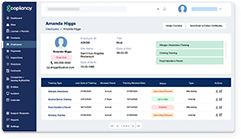
Each venue has a complete record of food, liquor, place of assembly, amusement, fire safety, and equipment permits. Single view of the entire compliance picture per location.
Sprinkler inspections, fire alarm certifications, hood suppression checks, extinguisher service, and emergency lighting tests all tracked per location with vendor coordination.
Place of assembly certificates with current capacity numbers per location. Documentation readily available during events and inspections.
Per-device permits where required. Equipment additions, replacements, and removals tracked. Periodic safety inspections aligned to device installation dates.
Fire alarm vendor, sprinkler vendor, hood suppression vendor, extinguisher service vendor — all tracked per location with service histories and contact information.
New venue applications tracked through building department, fire marshal, health department, and liquor authority. Multi-permit dependencies surface so the critical path is visible.
License certificates, fire inspection reports, sprinkler tests, hood suppression certifications, equipment permits all attached to records. SharePoint and Dropbox integrations supported.
When venues renovate or modify floor plans, the system tracks affected permits and the re-permitting workflow. Renovation projects stay coordinated with compliance.
Portfolio reporting across the venue base — license status, fire safety compliance, upcoming inspections, expired permits. Ready for ownership, board, and insurance review.
Frequently Asked Questions
Does Copliancy track MPAA agreements and film exhibition contracts?+
MPAA exhibition agreements and distributor contracts are typically managed in the operator’s contract management system. Copliancy can store agreement metadata and renewal dates as part of the location compliance record, but the negotiation and execution of exhibition agreements lives with operations and legal.
How does Copliancy handle fire safety inspection coordination?+
Each fire safety system (sprinklers, alarms, hood suppression, extinguishers, emergency lighting) has its own inspection cycle tracked per location. The system schedules upcoming inspections, captures vendor reports, tracks deficiencies through remediation, and proves compliance during inspector visits.
Can Copliancy track amusement device permits per machine?+
Yes. Where local jurisdictions require per-device permits (some cities permit each arcade game individually), Copliancy tracks devices as discrete records linked to the location. Permit numbers, fees, and renewal dates per device.
What about ADA compliance certifications?+
ADA compliance certifications and accessibility documentation are tracked alongside other location permits. Inspection results, remediation completed, and current certification status all part of the location record.
Does Copliancy handle special event permitting?+
Yes. Special event permits (premieres, private buyouts, corporate events with alcohol) can be tracked as discrete records linked to the location, with their own expiration dates and conditions.
Is Copliancy used by entertainment venue operators today?+
Yes. Multi-location entertainment operators including Topgolf, Alamo Drafthouse Cinema, Drive Shack, Round One Bowling & Arcade, Go Ape, Wedgewood Weddings, and others use Copliancy to manage their venue compliance.