











Texas Liquor License Management: TABC Compliance for Multi-Location Operators
The Texas Alcoholic Beverage Commission (TABC) oversees one of the largest and most fragmented liquor licensing systems in the country. Multi-location operators in Texas manage dozens of permit types per location — Mixed Beverage, Beer & Wine, Late Hours, Food & Beverage Certificate, Caterer, Wine-Only Package, and more — each with its own renewal schedule, fee structure, and local approval requirements. Add city and county-level permits, posted notices, and signed leases, and a single Texas location can carry 8-12 active alcohol-related permits. Multiply that across 20, 50, or 100+ locations and the workflow becomes unmanageable in spreadsheets. This guide explains how Texas multi-location operators handle TABC compliance and how Copliancy supports the workflow.
Texas liquor licensing is governed by TABC at the state level but layered with city and county requirements that make multi-location compliance complex. Each location carries multiple TABC permits — Mixed Beverage, Beer & Wine, Late Hours, Food & Beverage Certificate, Caterer, Wine-Only, and others — with two-year renewal cycles, fee schedules tied to gross receipts, and overlapping city/county certificates of occupancy, sign permits, and food service permits. Most operators run this workflow in spreadsheets or generic project tools, which fail at scale — missed renewals, expired posted notices, and lapsed permits trigger fines, shutdowns, and forced cessation of alcohol sales. Effective Texas liquor compliance requires centralized records per location and per permit, automated renewal alerts tied to TABC’s biennial cycle, document management for certificates and signed posts, payment tracking with AP integration, and aggregate visibility across the portfolio. Copliancy is used by Texas-based multi-location operators including Texas Roadhouse, King Ranch Texas Kitchen, Saltgrass Steak House, and others to handle exactly this workflow.
TABC and Texas Liquor Licensing at a Glance
The Texas Alcoholic Beverage Commission (TABC) regulates the sale, service, and distribution of alcohol throughout Texas. The agency issues dozens of permit types covering on-premise consumption, off-premise package sales, distribution, manufacturing, and importation. Multi-location restaurant and bar operators most often deal with on-premise consumption permits, package sales permits (for retail locations), and the auxiliary permits required for late hours, catering, and special events.
Key features of the Texas system that matter for multi-location operators:
- Biennial renewal cycle. Most TABC permits renew every two years. Renewal dates are tied to original issuance dates, not a state-wide calendar — meaning every location has different renewal dates.
- Layered local approval. TABC requires evidence of local approval (city/county certificate of occupancy, zoning compliance, signed health department certification) before issuing permits. Local requirements vary by jurisdiction.
- Posted notices. Texas requires posted notice of TABC application at the premises for 60 days before issuance. Documentation of posting and any objections received must be maintained.
- Fee structures tied to gross receipts. Some permits (notably Mixed Beverage) have fee components tied to reported gross alcohol receipts. Reporting errors trigger audits and back-fees.
- Conduct surcharges. Late renewal triggers fee increases and potentially loss of permit. There is no informal grace period.
- Server certification. All employees serving alcohol must complete a TABC-certified Seller-Server Training program within 30 days of hire. Certifications expire and must be tracked per employee.
TABC Permit Types Multi-Location Operators Track
The TABC permit catalog is extensive. Most multi-location restaurants and bars work with a defined subset:
On-premise consumption of distilled spirits, beer, wine, ale. Standard permit for full-service restaurants and bars. Two-year renewal. Reported gross receipts drive renewal fees.
On-premise consumption of beer and wine only (no distilled spirits). Common for casual dining and brewpubs. Lower fee than Mixed Beverage.
Extends alcohol service hours to 2:00 AM (instead of midnight). Required separately and renewed with the base permit. Local approval often required.
Certifies the location as a food-serving establishment for purposes of liquor sales. Required for Mixed Beverage holders below certain alcohol-to-food ratios.
Allows alcohol service at off-site catered events. Common for restaurant groups with catering divisions or banquet operations.
Off-premise wine sales. Used by retailers and some restaurant groups with retail wine programs.
Combined late-hours endorsement for mixed beverage establishments. Required for any service past midnight in most jurisdictions.
Required for transporting alcohol between locations — for catering, multi-location promotions, or commissary-style operations.
Required for delivery service from package stores. Relevant for off-premise retail operations expanding into delivery.
A typical Texas full-service restaurant location holds Mixed Beverage + Late Hours + Food & Beverage Certificate at minimum. Bars and lounges may add Catering. Multi-concept groups may have different permit mixes by location depending on local conditions and operational needs.
The TABC Renewal Process
TABC renewals follow a standardized process but require timely action and complete documentation:
Renewal Notice Issued (60-90 Days Out)
TABC sends a renewal notice approximately 60-90 days before expiration. The notice goes to the address of record — meaning multi-location operators must keep TABC contact information current or notices go to closed locations or former managers.
Gross Receipts Reporting
For Mixed Beverage permits, gross receipts of alcoholic beverages from the prior two years must be reported. The reporting determines renewal fees. Inaccurate reporting triggers audits and back-fees.
Local Approval Confirmation
Renewal requires confirmation that local approvals remain valid — certificate of occupancy current, zoning compliance unchanged, health department certification current, no outstanding code violations.
Fee Payment
Renewal fees are paid to TABC. Multi-location operators often process payments through AP, which requires renewal records to flow through the AP approval workflow on time.
New Permit Issued
TABC issues the renewed permit with new expiration date. The permit must be posted at the location. Documentation goes into the location’s compliance file for the next two-year cycle.
Missed renewals trigger automatic expiration. Texas does not offer informal grace periods. An expired permit means alcohol service must cease until a new permit is issued, which can take weeks or months. The financial impact of even a short alcohol shutdown at a full-service restaurant is substantial.
City and County Requirements Layered On Top
TABC issues the state permit, but local jurisdictions retain significant authority over where and how alcohol is served:
- Certificate of Occupancy. Required from the city. Must reflect the current use of the premises. Changes to floor plan or use (adding a patio, expanding seating, adding a kitchen) require updated CO before TABC renewal.
- Local food service permits. County health department permits for food service must be current. Health department inspections feed into local compliance.
- Sign permits. Exterior signage referencing alcohol service often requires city sign permits. Permits must be current and signage must match approved plans.
- Zoning compliance. The location must be in a zone that permits on-premise alcohol service. Zoning changes or non-conforming use determinations can affect renewal.
- Distance restrictions. Many Texas cities and counties prohibit alcohol service within specified distances of schools, churches, hospitals, or daycares. Operators expanding or modifying premises must verify continued compliance.
- Late hours local approval. Some jurisdictions require separate local approval for late-hours service in addition to the TABC Late Hours permit.
Multi-location operators with locations across multiple Texas cities (Houston, Dallas, Austin, San Antonio, Fort Worth, El Paso, and dozens of suburban jurisdictions) deal with materially different local requirements per location. Centralizing all of this in one system is the only way to track it at scale.
Common Texas Liquor Compliance Mistakes
Renewal notices go to outdated addresses. Multi-location operators must keep TABC contact info current as managers and corporate addresses change.
Inaccurate reporting (over or under) triggers TABC audits with back-fees and penalties. POS data must match what gets reported.
Missing the renewal deadline triggers fee surcharges and risk of permit loss. There is no informal grace period.
CO, health permits, or sign permits expire and operators don’t notice until renewal application fails. State-level tracking misses local dependencies.
Seller-Server Training certificates expire after two years. Operators without per-employee tracking discover lapses during TABC inspections.
60-day posted notice requirements must be documented. Lost photos or affidavits create issues at renewal or transfer.
How Copliancy Handles Texas Liquor Compliance
Copliancy is used by Texas-based multi-location operators including Texas Roadhouse, King Ranch Texas Kitchen, Saltgrass Steak House, and others. The platform handles the specific complexities of TABC compliance:
Each location has a complete record of all TABC permits with permit numbers, issue dates, expiration dates, fee history, and status. Searchable across the portfolio.
Automated alerts at 90, 60, and 30 days before expiration. Multiple stakeholders notified — compliance manager, location GM, AP team — ensuring nothing falls through.
CO, health permits, sign permits, and other local approvals tracked alongside TABC permits. Dependencies are visible — if CO is expiring, TABC renewal will fail.
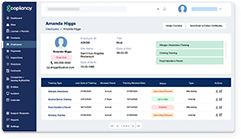
Per-employee Seller-Server Training certificates with expiration dates. Integration with HR systems (Workday, ADP, BambooHR, Paychex) keeps employee data current.
Posted notice photos, signed affidavits, certificates, renewal correspondence — all attached to the permit record. SharePoint and Dropbox integrations supported.
Renewal fees flow through the AP approval workflow. Payment status visible per permit. No surprise unpaid renewals.
New permit applications and transfers tracked from filing through TABC approval. Auto-promote to active status when permit issues. Critical for new location openings.
When a corporate change requires updating multiple permits (address change, ownership change, name change), bulk update workflows handle the volume.
Portfolio-wide reporting on permit status, upcoming renewals, expired permits, and compliance gaps. Ready for ownership, board, and risk committee meetings.
Frequently Asked Questions
Does Copliancy file TABC applications for us?+
No. TABC applications are filed by the operator or a licensing attorney through TABC’s online portal. Copliancy is the internal system of record — tracking applications in progress, capturing the resulting permit, scheduling renewals, and managing the full lifecycle. The actual filing remains with the operator or counsel.
How does Copliancy handle the gross receipts reporting requirement?+
Gross receipts reporting is filed directly with TABC by the operator’s accounting team based on POS data and financial records. Copliancy stores the reported figures, the filing dates, and any related correspondence as part of the permit record, so reporting history is preserved and available for audit response.
Can Copliancy track local Texas city and county permits alongside TABC permits?+
Yes. Copliancy tracks any permit type for any jurisdiction. Texas operators typically configure separate tracking for TABC permits, city certificates of occupancy, county health permits, city sign permits, and other local requirements. Dependencies are visible — if local approval is expiring, the system flags upstream impact on TABC renewal.
How does the server certification tracking work?+
TABC Seller-Server Training certifications are tracked per employee with issue date and expiration (typically 2 years). Copliancy integrates with HR systems (Workday, ADP, BambooHR, Paychex) and scheduling/POS systems (Crunchtime, R365, 7shifts, HotSchedules, Deputy) to keep employee rosters current. Expiring certifications get flagged before they lapse.
What about TABC inspections?+
TABC inspections are tracked in Copliancy alongside other regulatory inspections. Inspection dates, findings, citations issued, remediation deadlines, and final closure all get documented per location. Trends across the portfolio — which locations have repeat citations, which inspectors visit most often — become visible.
Is Copliancy used by Texas-based operators today?+
Yes. Texas-based and Texas-operating multi-location groups including Texas Roadhouse, King Ranch Texas Kitchen, Saltgrass Steak House, and others run their TABC compliance through Copliancy. The platform was built for exactly this type of multi-location, multi-jurisdiction workflow.