











Fire Safety & Life Safety Compliance for Multi-Location Operators
Fire safety and life safety compliance protects lives and prevents the most catastrophic operational events possible — fatal fires, mass-casualty incidents, building loss. Multi-location operators manage dozens of fire and life safety systems per location: suppression hoods, sprinklers, alarms, extinguishers, exit signs, emergency lighting, fire doors, smoke detectors. Each requires inspection, testing, and maintenance on specific schedules. Manual tracking via paper service tags and clipboard inspections breaks down predictably. This guide explains how multi-location operators handle fire and life safety compliance at scale and how Copliancy supports the workflow.
Fire safety and life safety compliance protects against the most catastrophic operational events possible — fatal fires, mass-casualty incidents, building loss, regulatory shutdown. Multi-location operators manage dozens of fire and life safety systems per location: kitchen suppression (Ansul) systems, sprinkler systems, fire alarm systems, fire extinguishers, exit signs, emergency lighting, fire doors, smoke detectors, carbon monoxide detectors, and life safety equipment specific to industry (kitchen hoods, fryer suppression, gaming surveillance, healthcare emergency equipment). Each system requires inspection, testing, and maintenance on specific schedules — monthly visual inspections, semiannual professional tests, annual certifications, and more. Manual tracking via paper service tags, clipboard inspections, and vendor email reports breaks down predictably. Effective fire safety compliance requires centralized records per system, automated inspection scheduling with vendor coordination, deficiency tracking with remediation enforcement, integration with fire department inspections, employee training on emergency procedures, and aggregate visibility for operations and compliance leadership. Copliancy supports all of this — used by multi-location operators across restaurants, retail, grocery, hospitality, healthcare, and other industries.
Fire & Life Safety Systems Multi-Location Operators Track
Ansul (and similar) systems suppressing fires above cooking equipment. Semiannual professional inspections typically required.
Building-wide automatic sprinklers. Annual professional inspection plus quarterly visual checks. Periodic flow testing required.
Fire alarm control panels, pull stations, smoke detectors, heat detectors, audible/visual alarms. Annual professional inspection.
Portable extinguishers throughout the facility. Monthly visual inspection plus annual professional inspection. 6-year teardown and 12-year hydrostatic testing.
Illuminated exit signs and battery-backup emergency lighting. Monthly visual checks plus annual professional testing.
Self-closing fire-rated doors. Periodic inspection of closure mechanisms and door condition.
In addition to alarm system devices, standalone smoke and CO detectors in specific areas. Periodic testing.
Kitchen exhaust hoods, ducts, and fans require periodic grease cleaning per NFPA 96. Frequency depends on cooking volume (typically quarterly or semiannual).
Healthcare emergency equipment, gaming surveillance, hospitality life safety systems, and other industry-specific equipment have their own requirements.
Why Fire & Life Safety Compliance Matters
Life Safety
The fundamental purpose of fire and life safety systems is protecting human life. Functioning systems are the difference between a contained fire incident and a fatal one. No operational consideration outweighs this.
Operational Continuity
Fire incidents — even contained ones — typically shut down operations for hours to weeks. Smoke damage, water damage from sprinkler activation, and required cleanup can affect operations long after the immediate fire is contained.
Insurance Requirements
Property insurance policies typically require maintenance of fire and life safety systems per code. Non-compliance can void coverage exactly when it’s needed most.
Regulatory Compliance
Fire codes (NFPA, local codes) impose specific inspection, testing, and maintenance requirements. Fire marshal inspections enforce compliance. Failed inspections can result in operational closure orders.
Litigation Exposure
When fire incidents cause injury or property damage, the operator’s maintenance records become central evidence. Documented compliance supports defense; missing records support plaintiff claims.
Brand Reputation
Fire incidents at branded locations generate news coverage using the brand name. The reputational impact lingers long after operational recovery.
Inspection Cycles and Requirements
Fire and life safety inspections run on multiple overlapping cycles:
Visual/Monthly
Visual inspections of fire extinguishers, exit signs, emergency lighting, sprinkler gauges, and similar items. Typically conducted by on-site staff using standard checklists.
Quarterly
More detailed inspections of certain systems. Cooking exhaust cleaning for high-volume operations.
Semiannual
Kitchen suppression system inspections by certified technicians. Specific to NFPA 17 and NFPA 96 requirements.
Annual
Professional inspections of sprinkler systems, fire alarm systems, fire extinguishers, exit signs, emergency lighting, and most other fire/life safety equipment.
Multi-Year
5-year sprinkler internal inspection, 6-year fire extinguisher teardown, 12-year fire extinguisher hydrostatic testing. Long-cycle requirements that are easy to forget.
On-Activation
Any system that activates (sprinkler discharge, suppression discharge, alarm activation) requires immediate inspection and recharge before being returned to service.
A Fire & Life Safety Workflow That Scales
-
1
Inventory Every System at Every Location
Document every fire and life safety system: suppression, alarm, sprinkler, extinguishers (with locations and types), exit signs, emergency lighting, exhaust hoods. Equipment-level records with serial numbers and installation dates.
-
2
Configure Inspection Schedules
Each system gets its required inspection cadence — monthly visual, semiannual professional, annual certification, multi-year teardown. Schedules are configured per system type.
-
3
Automate Vendor Coordination
Professional inspections are typically conducted by certified vendors. Vendor scheduling, inspection completion, and documentation flow through the platform.
-
4
Track Deficiencies to Remediation
Inspections that identify deficiencies generate remediation tasks with owners and deadlines. Deficiencies aren’t considered closed until repair documentation is attached.
-
5
Integrate Fire Department Inspections
Annual fire marshal inspections are logged with findings, remediation tracking, and follow-up inspection scheduling.
-
6
Train Staff on Emergency Procedures
Employee training on fire response, evacuation procedures, and emergency equipment use is tracked through the broader employee compliance workflow.
Vendor Management for Fire & Life Safety
Fire and life safety compliance depends heavily on third-party certified vendors. Effective vendor management:
Certified Vendor Selection
Verify vendor certifications match the work being performed. NFPA-certified inspectors for suppression systems, NICET-certified technicians for fire alarms, licensed fire protection contractors for sprinkler work.
Service Contract Management
Service contracts define scope, frequency, response times, and pricing. Contract renewals integrate with broader contract management workflows.
Performance Tracking
Vendor performance — on-time inspection completion, deficiency identification rate, response to deficiency repairs, billing accuracy — accumulates over time. Performance data informs vendor selection and pricing negotiations.
Documentation Standardization
Different vendors document differently. Standardizing required documentation (inspection reports, certifications, deficiency lists) supports portfolio-wide consistency.
Multi-Vendor Coordination
Different vendors typically handle different systems — one for suppression, another for alarms, another for sprinklers, another for extinguishers. Coordinating across vendors at each location prevents gaps.
How Copliancy Handles Fire & Life Safety Compliance
System Inventory
Every fire and life safety system is tracked with full metadata — type, location, installation date, manufacturer, serial number, certification history. Equipment-level records support detailed tracking and history.
Automated Inspection Scheduling
Inspection cadences are configured per system type. The platform generates inspection tasks automatically as each cycle approaches, routes tasks to appropriate vendors or internal staff, and tracks completion with documentation.
Vendor Coordination
Certified vendors are tracked as service providers with their certifications, service contracts, and performance history. Vendor inspection scheduling and completion flows through the platform.
Deficiency Tracking
Inspection findings generate remediation tasks with assigned owners, deadlines, and required documentation. Deficiencies don’t close without repair evidence attached.
Fire Department Inspection Integration
Fire marshal inspections are logged through Copliancy’s inspection and violation tracking module. Findings, remediation, and follow-up inspections all flow through one workflow.
Equipment and Repair Integration
Fire and life safety equipment ties to Copliancy’s equipment and repair management module. Service contracts, repair history, and warranty status are visible alongside compliance status.
Employee Training Integration
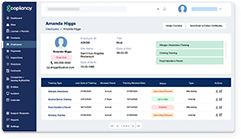
Employee training on fire response, evacuation procedures, and emergency equipment use is tracked through Copliancy’s employee module.
Aggregate Reporting
Corporate compliance sees fire and life safety status across the portfolio — overdue inspections, open deficiencies, locations with elevated findings, vendor performance trends.
Frequently Asked Questions
Can Copliancy handle fire suppression, alarms, sprinklers, and extinguishers all in one platform?+
Yes. All fire and life safety systems live in the same platform with appropriate metadata per system type. Suppression systems (Ansul, similar), sprinkler systems, fire alarm systems, fire extinguishers, exit signs, emergency lighting, and exhaust cleaning all follow their specific compliance requirements within one workflow.
How does Copliancy coordinate with our certified inspection vendors?+
Certified vendors are tracked as service providers with their certifications, service contracts, and performance history. Inspection scheduling, completion documentation, and deficiency reporting flow through the platform. The platform doesn’t typically have direct vendor system integration, but the workflow captures the documentation vendors produce.
What happens when an inspection identifies a deficiency?+
Each deficiency generates a remediation task with an assigned owner, a deadline based on regulatory requirements, and required documentation. Tasks don’t close without repair evidence attached. As deadlines approach without completion, the system escalates to managers and corporate compliance.
How does Copliancy handle long-cycle requirements like 6-year extinguisher teardown?+
Multi-year inspection cycles are tracked with the same workflow as annual cycles. The platform generates tasks at the appropriate cadence regardless of cycle length. 5-year sprinkler internal inspections, 6-year extinguisher teardowns, and 12-year hydrostatic testing all surface when due.
Can Copliancy track fire marshal inspections alongside vendor inspections?+
Yes. Fire department inspections, certified vendor inspections, and internal self-inspections all flow through Copliancy’s inspection and violation tracking module. Findings from any inspection source generate remediation tasks with the same workflow.
Does Copliancy support employee training on emergency procedures?+
Yes. Employee training on fire response, evacuation procedures, and emergency equipment use is tracked through Copliancy’s employee module. New hires automatically enroll; periodic refresher training fires alerts. Training compliance integrates with the broader fire safety workflow.