











License Management for Hospitality & Gaming Operators
Hospitality and gaming operators face one of the most complex license and permit environments in any industry. A single integrated resort might combine hotel licensing, food and beverage licensing, alcohol licensing, gaming regulatory compliance, entertainment venue permits, retail operations, and event licensing — all under one roof. Multi-property hospitality groups multiply that complexity across every location. This guide explains how hospitality and gaming operators manage licenses at scale and how Copliancy supports the workflow used by national hospitality and entertainment operators.
Hospitality and gaming operators face one of the most complex license environments of any industry. A single integrated property might combine hotel licensing, food and beverage service, alcohol licensing, gaming regulatory compliance, entertainment venue permits, retail operations, spa and pool permits, and special event licensing — all governed by overlapping federal, state, county, city, and tribal authorities. For multi-property operators in the casino, resort, hotel, and entertainment categories, the volume of licenses multiplies across each property. Manual tracking simply doesn’t work. Effective hospitality compliance requires centralized records spanning every license category, jurisdiction-specific renewal workflows, gaming-specific compliance integration, role-based access for property-level GMs, multi-stage renewal notifications, and audit-ready documentation. Copliancy is purpose-built for this complexity and is used by hospitality and entertainment operators including Topgolf, Drive Shack, Round One Bowling & Arcade, Go Ape, Wedgewood Weddings, Alamo Drafthouse Cinema, Planet Hollywood, Hyde, Hyde Sunset, Zouk LA, S Bar, Cafe Hollywood, Life Central Park Rooftop, Nightingale, American Golf, and many more.
Why Hospitality & Gaming Is Uniquely Complex
Most industries operate under one primary regulatory layer. A retail chain mainly deals with state and local business licensing. A healthcare facility mainly deals with state medical and federal HIPAA. But hospitality and gaming operate under nearly every regulatory layer simultaneously:
- Federal: EIN, federal tax, FCC for in-room media, FAA for any aviation operations, ADA compliance, and federal anti-money-laundering rules for gaming
- State: Hotel licensing, liquor licensing, gaming regulation, food service, sales tax, employment
- County: Health permits, business tax licenses, environmental, fire safety
- City: Zoning, building permits, signage, occupancy, special event permits, sidewalk café permits
- Tribal: For tribal gaming operations, tribal-state compacts and tribal gaming commission rules add another layer entirely
And a single property can contain multiple revenue centers, each with its own licensing universe:
- Hotel operations (lodging license, hotel occupancy tax permit)
- Multiple food & beverage outlets (each with its own health permit, alcohol license, and possibly entertainment license)
- Gaming operations (gaming licenses for the property, individual licensing for key employees, surveillance and security requirements)
- Spa and pool (pool permits, massage therapy facility licenses)
- Retail (separate sales tax, business licensing)
- Entertainment venues (special event permits, music licensing, performance permits)
- Banquet and convention space (special event permits per event)
License Types Hospitality Operators Manage
State-issued hotel or lodging licenses, plus hotel occupancy tax registration. Required before guest accommodations can be sold.
Integrated resorts often hold multiple liquor licenses — one per F&B outlet, plus banquet/event service licenses. Each renews independently.
One health permit per F&B outlet typically. Each subject to its own inspections and renewal cycle.
State gaming commission licensing for the property and individual licensing for key gaming employees. Renewal cycles vary by state and license class.
Health department pool permits, plus state cosmetology licensing for spa operations and individual practitioner licenses.
Live entertainment licenses, dance permits, late-night operations permits, and special event permits per event.
Exterior signage, marquee signs, building occupancy certificates, and special use permits.
Required for any music played throughout the property — lobby, F&B outlets, gaming floor, fitness center, pool deck.
Gaming-Specific Compliance
Gaming operations layer additional compliance on top of standard hospitality requirements. Specifically:
Property-Level Gaming License
State gaming commissions issue the underlying authorization for the property to operate gaming. Renewal cycles vary by state (typically 1-3 years). Renewal applications often require detailed financial disclosures and audit submissions.
Individual Licensing
Key gaming employees (executives, dealers, surveillance staff, count room personnel) hold individual gaming licenses that must be maintained separately. Each individual license has its own renewal cycle.
Surveillance and Security Compliance
Surveillance systems must meet specific gaming commission requirements. Documentation of system maintenance, recording retention, and security incident response is typically required.
Anti-Money-Laundering (AML) Compliance
Federal AML rules apply to gaming operations above specified revenue thresholds. Compliance includes currency transaction reporting (CTRs), suspicious activity reporting (SARs), and customer identification procedures.
Responsible Gaming Programs
State gaming commissions typically require responsible gaming programs, including self-exclusion lists, problem gambling resources, and staff training.
Tribal Gaming (Where Applicable)
For tribal gaming operations, additional layers apply: tribal-state compact compliance, National Indian Gaming Commission (NIGC) oversight, and tribal gaming commission rules.
Multi-Property Operations
Hospitality groups operating multiple properties multiply every dimension of complexity. A regional hotel group with 20 properties might be managing:
- 20 hotel/lodging licenses across multiple states
- 40-80 individual liquor licenses (multiple F&B outlets per property)
- 30-60 health permits
- 20-30 pool permits
- 20-100+ special event permits across the calendar year
- Hundreds of supporting employee certifications (ServSafe, food handler, alcohol service, etc.)
Without centralized tracking, each property becomes a compliance island. Corporate visibility is limited to whatever the property-level GM reports up. Renewals get missed, supporting documents drift out of date, and brand-wide compliance reporting requires manual data extraction from each property.
The solution is a multi-property platform where each property maintains its own records, but corporate has aggregate visibility across the entire portfolio. Exception-based reporting flags issues at the brand level. Bulk operations process renewals efficiently. Cross-property patterns become visible.
How Copliancy Handles Hospitality & Gaming Complexity
All License Categories in One Platform
Hotel licenses, liquor licenses, health permits, gaming licenses (where applicable), pool permits, entertainment permits, signage permits, and supporting documentation all live in one system. No more separate tools per category.
Multi-Outlet Per Property
For properties with multiple F&B outlets, each outlet’s licenses are tracked individually with renewal cycles, inspections, and documentation per outlet — not aggregated to a property-level record that loses important detail.
Jurisdiction-Aware Workflows
Renewal timing, document checklists, and notification routing are configured per jurisdiction. A property in Nevada follows Nevada rules; a property in New Jersey follows New Jersey rules; a tribal property follows tribal-state compact rules.
Site Due Diligence and Development
For new property openings, Copliancy guides companies through the due diligence and development of new sites until they are operational. The platform handles the licensing complexity of bringing a new hospitality property online.
Contract Management
Lease and contract management is integrated, so each property’s documents — lease, vendor contracts, music licensing agreements, equipment leases — live alongside the license records.
Equipment and Repair Management
Hospitality properties operate dozens of major equipment categories: HVAC, pool equipment, kitchen equipment, gaming equipment (where applicable), elevators, fire suppression. Copliancy tracks equipment, preventive maintenance schedules, and repair history.
Inspection and Violation Tracking
Health inspections, fire inspections, gaming compliance audits, ABC inspections — every inspection is logged with findings, remediation tasks, and completion tracking. Cross-property patterns surface in aggregate reports.
Incident Reporting and Insurance Claims
Hospitality properties generate a steady flow of incidents (guest injuries, employee incidents, property damage). Copliancy includes incident reporting and insurance claims management integrated with the compliance workflow.
Role-Based Access
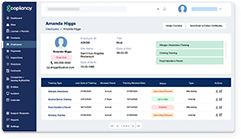
Property-level GMs and operations staff see their own property. Corporate compliance sees the portfolio. Reporting is configurable by role.
Hospitality, Gaming & Entertainment Operators Using Copliancy
Copliancy is used by hospitality, gaming, and entertainment operators including: Topgolf, Drive Shack, Round One Bowling & Arcade, Go Ape, Wedgewood Weddings, Alamo Drafthouse Cinema, Planet Hollywood, Hyde, Hyde Sunset, Zouk LA, S Bar, Cafe Hollywood, Life Central Park Rooftop, Nightingale, Asian Street Eats, Warrior, SBE Restaurant Group, Katsuya, Casa Dani, Toca Madera, Salis Holdings, Bluemont Group, Dividend Restaurant Group, American Golf, Kumi Japanese Restaurant & Bar, Citizens Kitchen and Bar, Rock Reilly’s, The Breakfast Club, Seaside on the Pier, and many other multi-property operators.
Frequently Asked Questions
Can Copliancy handle gaming-specific compliance?+
Copliancy tracks gaming licenses, individual licensing for key gaming employees, supporting documentation (financial disclosures, AML records, surveillance documentation), and renewal workflows. The platform handles the operational tracking of gaming compliance — though gaming commissions themselves have their own portals for filing-specific actions.
How does Copliancy handle multi-outlet properties?+
Each F&B outlet, retail venue, or other revenue center within a property is tracked as a separate sub-entity with its own licenses, inspections, and supporting documentation. Property-level rollup reporting aggregates across all outlets when needed, but the underlying detail per outlet is preserved.
Can Copliancy track individual gaming employee licenses, not just property-level?+
Yes. Individual gaming employee licenses can be tracked through Copliancy’s employee management capabilities, with renewal alerts and supporting documentation. The platform integrates individual licensing with the broader property-level gaming compliance workflow.
Does Copliancy handle special event permits?+
Yes. Special event permits, special use permits, and event-specific licensing are tracked as time-bounded records with their own approval workflows. For hospitality groups running frequent events, the recurring permit workflow becomes a structured template rather than ad hoc effort per event.
Can corporate hospitality compliance teams see across all properties?+
Yes. Role-based access supports the multi-property model where corporate compliance teams have aggregate visibility while property-level GMs and managers see their own property. Exception-based reporting surfaces issues that need corporate attention without requiring corporate to review every record individually.
How does Copliancy support tribal gaming operations?+
For tribal gaming operators, Copliancy handles the property-level license tracking, individual employee licensing, supporting documentation, and renewal workflows. Tribal-state compact compliance and tribal gaming commission requirements are handled through the platform’s flexible jurisdiction-tagging — letting tribal gaming compliance work within the same overall framework as other regulated industries.